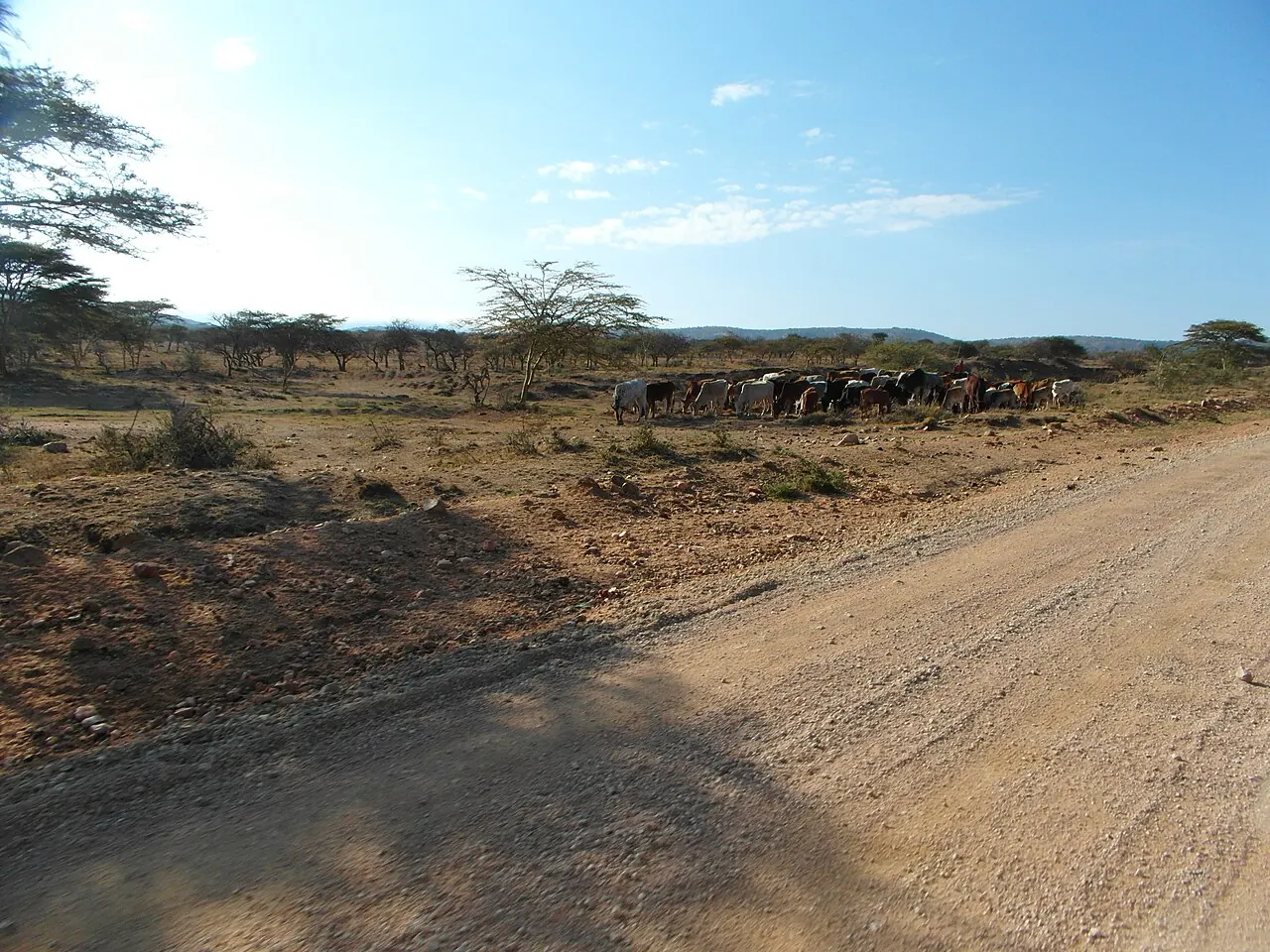

What are the biggest threats to the Masai Mara?
Land subdivision and fencing, settlement and farming spreading into wildlife areas, heavy livestock pressure, too much tourism infrastructure in places, forest loss on the escarpments and in the Mau, and the economic shocks that push landowners to sell or farm.
Subdivision and fencing
Fenced land rose from about 5% of the Greater Mara in 1985 to 19% in 2020, and to 31% of unprotected land1. MMWCA lists rapid subdivision, fencing and settlement as threats2. What helps: paid fence removal and targeted corridors; see reopening corridors.
Farming and settlement
More than 400 km² of wet-season grazing was converted to agriculture over 39 years3, and the 2024 census notes wheat and maize, fences, towns and roads spreading4. Centres such as Talek, Sekenani and Aitong are growing into wildlife habitat5.
Livestock pressure
Cattle incursions into the Reserve rose by over 1,000% between 1977 and 20166, and across Kenya’s rangelands livestock outweigh wildlife about eight to one7. What helps: grazing plans made with herders and grass banks; see grazing rules.
Tourism infrastructure
Infrastructure across the Greater Serengeti–Mara grew 783% in 20 years; wildebeest avoid land within 6 km of buildings and lion densities fall where camps are dense8. What helps: bed caps like those in the conservancies; see bed caps.
How fast is the Mara changing?
Is anything working to protect the Mara?
Yes. Conservancies have kept fencing to about 4% inside their boundaries; Pardamat has removed 473 km of fences; elephants have more than tripled since the 1980s; and lion numbers are holding.11314315
The lesson is that open land survives where keeping it open pays and where the people who own it agreed the rules. That is why we organise barazas and publish a profile of every conservancy.
Sources for this page
- New land tenure fences are still cropping up in the Greater Mara (Løvschal et al., Sci Rep 12) · Scientific Reports (Nature) · 2022-07-06
- MMWCA Strategic Plan 2026-2036 (summary) · MMWCA · 2026-03
- Migratory Wildlife Corridors and Dispersal Areas: Kenya Rangelands and Coastal Terrestrial Ecosystems (Kenya Vision 2030 flagship report; Ojwang' et al.) · Government of Kenya (KWS / Ministry of Environment); copy hosted by Mara Elephant Project · 2017-07
- National Wildlife Census 2025 Technical Report (abridged) · WRTI / KWS / Ministry of Tourism and Wildlife (copy at Rhino Resource Center) · 2025-12
- Narok County Physical and Land Use Development Plan · County Government of Narok · 2023
- People are taking a huge toll on the plains of the Serengeti-Mara · The Conversation · 2019-04-01
- Extreme Wildlife Declines and Concurrent Increase in Livestock Numbers in Kenya: What Are the Causes? (Ogutu et al.) · PLOS ONE · 2016-09-27
- GSCS 8th Forum 2026: Summary of conclusions (Serengeti-Mara stakeholder forum) · GSCS forum (hosted by serengeti-forever.org) · 2026-03
- Protecting Forest Habitats in the Maasai Mara with Mara Elephant Project · Global Forest Watch / WRI · 2023-09-20
- Q2 2026 Ranger Report · Mara Elephant Project · 2026-07-22
- When Pandemic Hit Maasai Mara, New Fund Stepped in to Stabilize Conservancies, Protect Wildlife · Conservation International · 2023-07-06
- Covid-19 pandemic effects and responses in the Maasai Mara conservancy · Peer-reviewed article (PubMed Central) · 2023
- A Space Where People and Wildlife Thrive (Pardamat Conservation Area) · The Nature Conservancy · 2025-12-01
- National Elephant Action Plan for Kenya 2023-2032 · KWS / Ministry of Tourism and Wildlife (copy at AWF) · 2023
- MPCP Q1 2026 Technical Report: updated lion and cheetah figures · Mara Predator Conservation Programme (Kenya Wildlife Trust) · 2026-06-02
Sources checked 22 November 2026.
Bring it to a baraza
Landowners, leaseholders, residents, camps and conservancy managers: a baraza is where questions about leases, grazing, corridors and wildlife get answered in the open, in Maa, Kiswahili or English. Ask us to help organise one in your village.