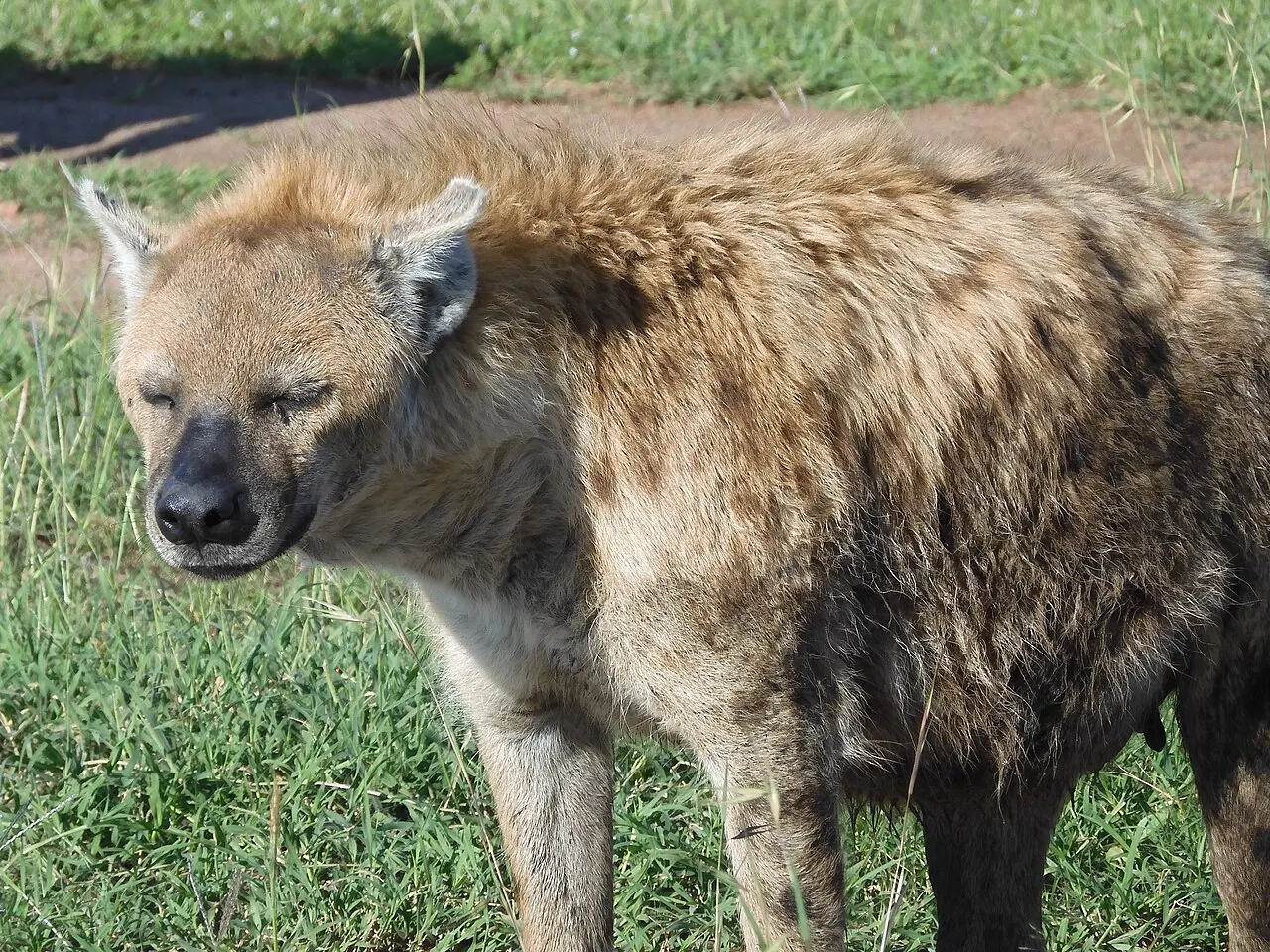

What is Olare Motorogi Conservancy?
Olare Motorogi Conservancy covers about 33,386 acres on the northern boundary of the Masai Mara National Reserve, with the Olare Orok and Ntiakitiak river valleys. It began as Olare Orok Conservancy in 2006 with 277 Maasai landowners and later took in Motorogi; MMWCA now counts 288 landowners and its tourism is capped at 94 beds.
- Establishedstatus, 2025 map
- 2006started
- 135 km²published area
- 288landowners
- MMWCA's 2025 ecosystem map lists the two parts separately: Motorogi Conservancy (ID 8) and Olare Orok Conservancy (ID 12), both of type 'Conservancy' and status 'Established'.2
- KWCA's directory keeps two separate records, 'Olare Orok Conservancy' and 'Motorogi Conservancy' (Mara region, Narok County).2829
- The conservancy is managed by Olpurkel Ltd, a not-for-profit company whose shareholders are the operators, controlled by a Board with equal representation from landowners and tourism partners plus representatives of The Maa Trust (conservancy site, page dated 2018).3
- Each landowner holds a freehold title deed. Landowners individually lease their parcels to a Land Holding Company they own, and as a group this company contracts the contiguous area to a management company.5
Also written: Olare Motorogi, Olare-Motorogi, OMC, Olare Orok Conservancy (OOC), Motorogi Conservancy, Olare Orok and Motorogi conservancies, Motorologi-Olare Orok (spelling in Chakrabarti & Ekblom 2023), Olara Orok conservancy (spelling on KWCA association page).
Olare Motorogi official website →
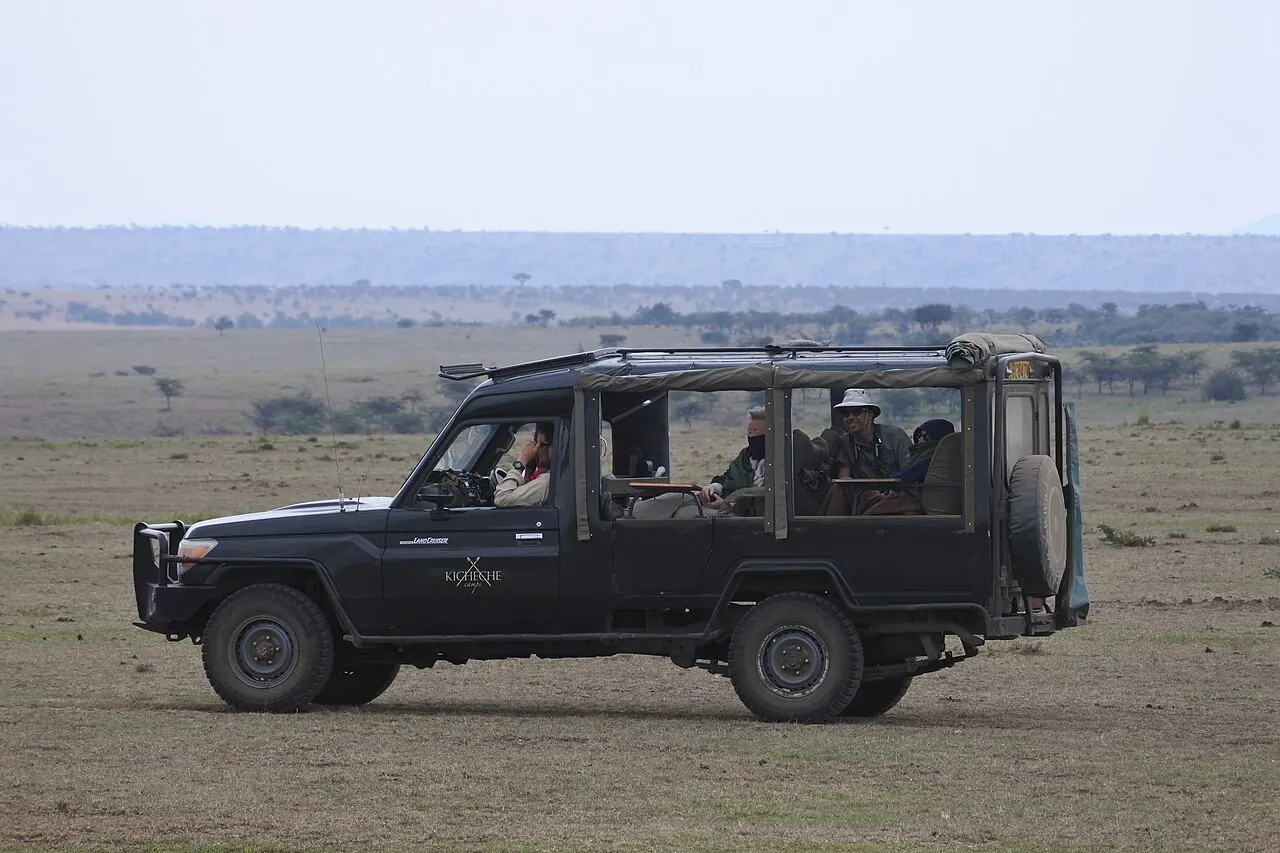

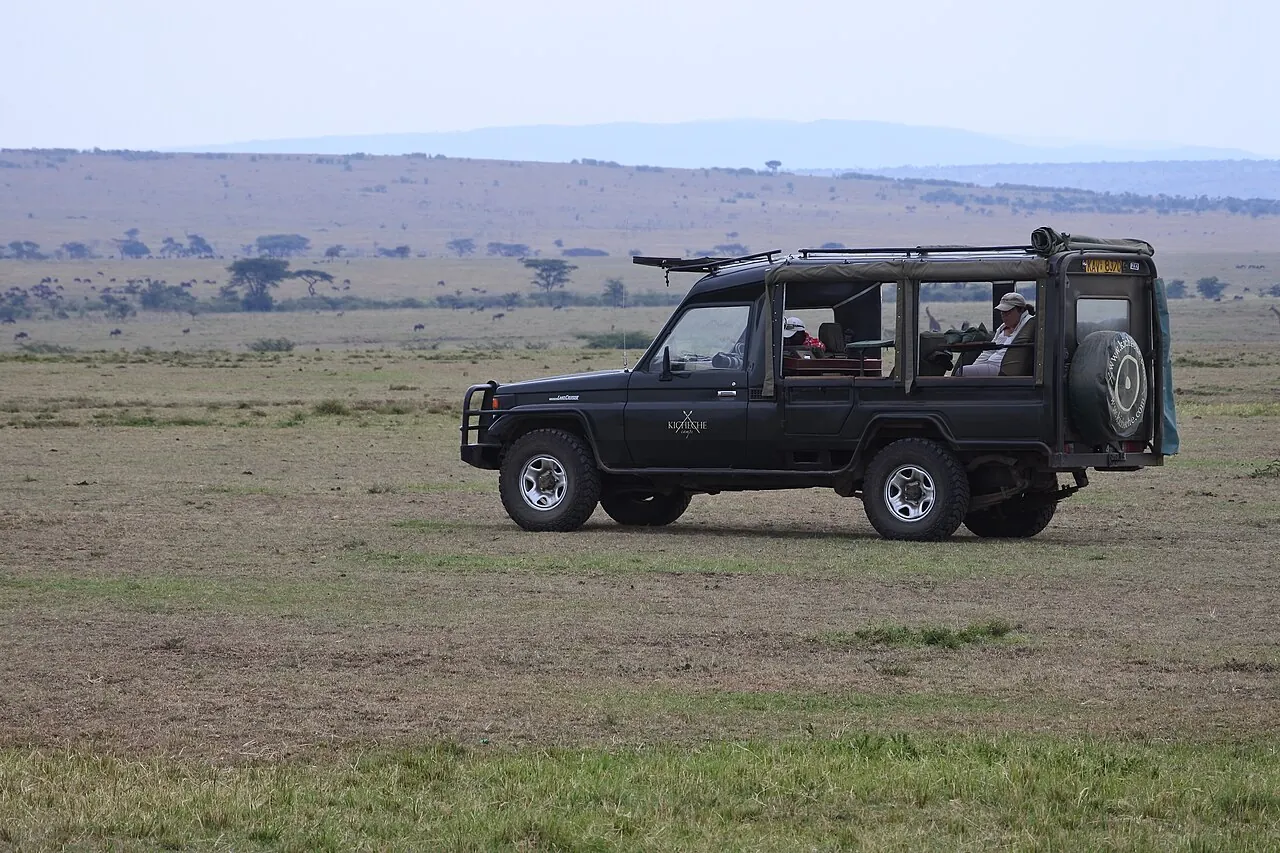

Where is Olare Motorogi?
On the northern boundary of the Masai Mara National Reserve. It takes in the lower valleys of the Olare Orok and Ntiakitiak rivers, the Ntiakitiak Gorge and a 12 km escarpment fringed by acacia woodland. Olare Orok lies to the south-west and Motorogi to the north-east (OSM polygons). The coordinates below are the Olare Orok airstrip as given by the conservancy, not a measured centre.7173233
Borders and neighbours: Masai Mara National Reserve.
Administration: Siana (Olare Orok part) / Mara (Motorogi part), per OSM ward, Narok West sub-county, Narok County.
- The conservancy has its own bush airstrip, Olare Orok (1°19'33.77"S 35°14'57.23"E, 1,728 m). Safarilink and AirKenya run scheduled flights from Nairobi Wilson in about an hour, and there are flights from Samburu, Nanyuki, Naivasha and Mombasa. Private charters are possible.7
- By road it is 5-6 hours from Nairobi (conservancy site).7
Who owns and runs Olare Motorogi?
- a partnership with 288 landowners (MMWCA profile text, read Nov 2026)1
- 297 landowners (MMWCA stats card, read Nov 2026)1
- owned by over 300 Maasai landowners (conservancy site, 2018)510
- 277 Maasai landowners in the May 2006 Olare Orok deal (conservancy site); 277 landowners for the merged conservancy (MERC 2014)330
- 292 landowners, 5 facilities (Chakrabarti & Ekblom 2023)31
- Olare Orok 157 + Motorogi 120 landowners (Bedelian 2014, 2012 data; sum is ours)13
- Olare Orok and Motorogi later merged under one management to form Olare Motorogi Conservancy (MMWCA).11
- The two adjacent conservancies were renamed Olare Motorogi Conservancy and are managed as one entity (Porini).16
- The two conservancies combined in 2012 (Bedelian & Ogutu 2017). A 2014 MERC field report describes them as 'recently merged for joint management'.1530
- The Board of Directors balances landowners with more traditional pastoralist interests against tourism operators with commercial interests (conservancy site).5
- Management works closely with the Kenya Wildlife Service on animal health and welfare (conservancy site).3
- The management team, together with facilitators and elders, brokered the removal of homesteads and a reduction in livestock herd sizes inside the core conservation areas (conservancy site).4
How do leases and payments work in Olare Motorogi?
- Payment moved from a bed-night system to a monthly rental from the safari camps, giving landowners a steady income (conservancy site).4
- In 2012 both Olare Orok and Motorogi paid KES 3,800 (US$48) per hectare per year on 15-year leases; a few landowners were still on 5-year contracts (Bedelian 2014).13
- The 2012 LDPI paper gives US$33 per ha per year under the 5-year contract and US$43 under the 15-year contract for both parts.14
- Virgin delayed building its camp in Motorogi, partly because of the 2008 post-election violence and the drop in tourism, and partly to wait until a 15-year lease was secured (Bedelian 2014).13
- On top of the monthly rent, partner camps donate US$5 per guest per night to The Maa Trust (conservancy site).6
- Gamewatchers/Porini's own reported contribution to the conservancy: US$380,000 (2014), 291,000 (2015), 331,800 (2016), 332,100 (2017), 371,000 (2018), 461,159 (2019), 232,943 (2020), 226,690 (2021), 382,607 (2022), 426,727 (2023).16
- Mara Plains Camp's text on the conservancy site says the conservation fees its guests pay support over 1,000 Maasai families.8
- In the Koiyaki conservancies Bedelian & Ogutu studied (Olare Orok and Motorogi among them), landowners receive fixed monthly lease payments direct to their bank accounts, regardless of tourist numbers, and agree to remove settlements and livestock from the leased land.15
Lease terms differ between conservancies and change at renewal. Read landowner and leaseholder rights before signing or renewing, or ask for a baraza to go through a lease together.
Can livestock graze in Olare Motorogi?
- The conservancy uses 'Kundi Moja' (one herd): landowners graze a small area in a tight formation, graze it short, then move on to the next designated area. Elders traditionally decided which areas were grazed (conservancy site).3
- Short-grass areas vacated by the cattle become hot spots for short-grass grazers. Water catchments are built around the grazing pattern so that cattle and wildlife both have water nearby (conservancy site).3
- Diurnal refuge areas for predators were left completely free of domestic livestock (conservancy site).4
- MMWCA says the local people agreed to move their homes and allow only carefully managed cattle grazing.1
- During the severe 2009 drought, Olare Orok rangers worked round the clock, particularly at night, removing cattle from the conservancy. They collected about US$3,000 in grazing fines over three months (Bedelian 2012).14
- Across the conservancies Bedelian studied, herds caught grazing illegally were fined US$63 or US$125 depending on the conservancy and impounded until the fine was paid.14
- Conservancy employees interviewed in 2014 expressed pride in the original Olare Orok grazing plan and its recognition of traditional grazing patterns (MERC).30
Grazing rules are made by each conservancy with its landowners. Our page on grazing and conservancy rules sets out how rules can protect wildlife without harming the Maasai pastoral way of life.
What wildlife lives in Olare Motorogi, and what is its corridor role?
Wildlife in Olare Motorogi
- The conservancy claims one of the highest concentrations of big cats in Africa and over 300 bird species, including 50 raptor species (conservancy site).10
- Several lion pride territories meet in the conservancy (conservancy site).9
- MMWCA says rhinos and wild dogs have been sighted and that the area is becoming viable habitat for both.1
- Mara Predator Conservation Programme survey (Aug-Oct 2025): 32 lions over one year old, 21.98 per 100 km2, the third-highest density after Ol Kinyei and Naboisho. The 2024 figures were 36 lions and 24.09 per 100 km2.23
- MPCP reported that lion density fell from 23.62 per 100 km2 (2018) to 12.6 (2019), almost half, and that it was looking into plausible reasons.24
- MPCP 2020 survey: 58 lions, 39.6 per 100 km2.34
- In the Aug-Oct 2014 survey, Olare Motorogi had the highest posterior mean lion density of the areas studied: 44.95 lions, 32.42 per 100 km2. Olare Orok excluding Motorogi: 30.06 lions, 31.55 per 100 km2 (Elliot & Gopalaswamy 2017).26
- MPCP recorded 13 different adult cheetahs (5 females, 8 males) and 6 cubs in Olare Motorogi (Q3 2019 report).25
Migration corridor in Olare Motorogi
Research in Olare Motorogi
- Kenya Wildlife Trust's Tony Lapham Mara Predator Hub, launched in November 2013, is located in the conservancy. It is the base of the Mara Cheetah Project and Mara Lion Project (conservancy site).9
- The conservancy assisted Living with Lions and Colorado State University with collaring, including 18 wildebeest from the Loita herds, to study their migratory route (conservancy site).3
- Olare Motorogi is a management unit in MPCP's annual lion and cheetah surveys, run every year since 2014.2326
Why corridors matter for the whole Mara: opening the migration corridors.
Which camps are in Olare Motorogi?
| Source | |||
|---|---|---|---|
| Porini Lion Camp | Gamewatchers Safaris / Porini Camps | – | 818 |
| Kicheche Bush Camp (now Kicheche Bush Olare) | Kicheche Camps | – | 821 |
| Mara Plains Camp | Great Plains Conservation | – | 835 |
| Olare Mara Kempinski | Kempinski | – | 822 |
| Mahali Mzuri | – | 24 | 813 |
- Tourism is limited to a maximum of 94 beds in five light-footprint camps, which equates to one game-viewing vehicle for every 2,100 acres (conservancy site, 2018).3
- There is only one guest bed per 350 acres (conservancy site).9
- No partner camp is larger than 24 beds (conservancy site, 2019).8
- In 2016, five camps with 47 tents (Mahali Mzuri 12, Porini Lion 10, Mara Plains 7, Olare Kempinski 12, Kicheche Bush 6) paid leases for 32,900 acres (Porini).18
- Ol Kinyei, Naboisho and Olare Motorogi limit tents: a maximum of 12 tents per camp, 1 tent per 700 acres and 1 safari vehicle per 1,400 acres. Porini attributes the formula to Jake Grieves-Cook of Gamewatchers, devised for Ol Kinyei in 2005.18
What can visitors do in Olare Motorogi, and what does it cost?
- The game-drive code of conduct published by Porini covers Olare Motorogi, Ol Kinyei and Selenkay. It requires recognised 4×4 vehicles in earth colours (no vans or minibuses), guides with at least a KPSGA bronze qualification, and no smoking or alcohol on drives.19
- Under the same code, no more than five vehicles may be close to an animal at one time. At a hunt, each extra vehicle adds 10 m of distance (6 cars = 60 m). The vehicle that found the sighting controls it, and only one vehicle may have its engine running at a stationary sighting.19
- Off-road driving is 'strongly discouraged'. It is allowed only when necessary for game viewing, when it does not stress the animal or damage flora unnecessarily, and never as a short cut.19
- Night game drives are restricted to tourism partners. They must report to the warden or manager, keep to a 2-hour limit (or notify management) and not shine spotlights at camps or other vehicles.19
- Camps must be semi-permanent with no foundations, and camps, guests and guides must follow a strict code of conduct (conservancy site).3
- Kicheche Bush Olare accepts children aged 7 and over, and Kicheche does not allow children under 16 on walks (2026 rate sheet).20
- day game drives in 4×4 vehicles
- off-road driving within the code's conditions
- night game drives (tourism partners only; Olare Mara Kempinski departs 7 pm)
- guided bush walks
- wild camping / fly camping (Kicheche)
- horse-riding and balloon safaris (listed for Olare Mara Kempinski)
- cultural visits, including The Maa Trust beadwork visit
How conservancy fees compare with Reserve entry: Mara conservancy fees and visitor rules.
How does Olare Motorogi support its community?
- The Maa Trust's projects include schools, honey production, conservation education, beadwork, water and sanitation, health clinics, bursaries, small business start-ups and micro-finance (conservancy site).6
- The Olare Orok & Motorogi Trust was set up in 2009 to work with communities and stakeholders (KWCA).27
- The conservancy employs 23 community rangers and has built workshops, an administration HQ and solar-powered field bases. It owns two tractors, road-building equipment and a dam scoop (conservancy site).5
- Management employs from the landowner community wherever possible and encourages partners to do the same (conservancy site).3
What challenges does Olare Motorogi face?
- Bedelian (2012) found grazing restrictions in the Mara conservancies 'very contentious', creating community conflict. Non-members may be excluded from grazing, illegal grazing by members and non-members was common, and many people reported abuse by rangers towards herders. This applies to all the conservancies studied, not only Olare Orok.14
- Porini's payments to the conservancy halved during the Covid-19 collapse in tourism: US$461,159 in 2019 against US$232,943 in 2020.16
- MPCP flagged the 2019 halving of lion density as unexplained and under investigation.24
We report what sources say, from every side. Claims made by one party are reported as claims, not as findings; only a court decides who is right, and interim court orders are not final decisions. If you are named here and want your response added, or think something is wrong, write to hello@maraconservation.org and we will review it within 14 days. If you live with one of these issues, a baraza is where it can be raised and recorded.
History of Olare Motorogi
Where do sources disagree about Olare Motorogi?
Published figures do not always match. We show each one with its source instead of picking one.
| Topic | What the sources say | Sources |
|---|---|---|
| area | 33,386 acres (MMWCA text) 15,200 ha = about 37,560 acres (MMWCA stats card) 35,000 acres (conservancy site, Kicheche) 33,000 acres (Porini) 32,900 acres leased (Porini 2016; MERC 2014) 9,720 ha + 5,466 ha = 15,186 ha (Bedelian 2014, 2012 data) about 13,980 ha from OSM polygons (our calculation, approximate) | 1101618 |
| landowners | 288 (MMWCA text) 297 (MMWCA card) over 300 (conservancy site) 277 (conservancy site for 2006; MERC 2014) 292 (Chakrabarti & Ekblom 2023) 157 + 120 = 277 (Bedelian 2014) 154 for Olare Orok (Bedelian 2012) | 15330 |
| founding year of Olare Orok | May 2006 (conservancy site; Bedelian; Porini) 2007 (MMWCA history articles) | 3131611 |
| founding year of Motorogi | 2007 (Bedelian 2014; Bedelian & Ogutu 2017) the year after Olare Orok, i.e. 2008 on MMWCA's dating | 13151112 |
| size of each part | Olare Orok 22,000 acres, Motorogi 11,000 acres (Porini) Olare Orok 9,720 ha (about 24,000 acres), Motorogi 5,466 ha (about 13,500 acres) (Bedelian 2014) OSM polygons about 9,170 ha and 4,810 ha (our calculation) | 16133233 |
| 2012 lease rate | KES 3,800 = US$48 per ha per year (Bedelian 2014 thesis) US$33 (5-yr contract) / US$43 (15-yr contract) per ha per year (Bedelian 2012 LDPI paper) | 1314 |
| number of tourism investors (2012) | Olare Orok 5, Motorogi 1 (Bedelian 2014) Olare Orok 4, Motorogi 4 (Bedelian 2012 table) | 1314 |
| big-cat density claim | 'highest concentration of big cats anywhere in Africa' (conservancy site) MPCP 2023 and 2025: Ol Kinyei had the highest lion density in the Mara; Olare Motorogi was second (2023) and third (2025) | 923 |
Questions about Olare Motorogi
Is Olare Motorogi one conservancy or two?
How much is the Olare Motorogi conservancy fee?
Kicheche Bush Olare's 2026 rate sheet lists US$130 per adult and US$65 per child (7-17) per night. The fee is paid through your camp, and other camps may include it in their rates.20
Can you do a night game drive in Olare Motorogi?
Which camps are in Olare Motorogi Conservancy?
Who owns Olare Motorogi Conservancy?
How do you get to Olare Motorogi?
Fly to the Olare Orok airstrip, about an hour from Nairobi Wilson on Safarilink or AirKenya, or drive from Nairobi in 5-6 hours.7
Are there a lot of lions in Olare Motorogi?
In the 2025 MPCP survey it held 32 lions over one year old, a density of 21.98 per 100 km2. That was the third-highest density in the Mara, after Ol Kinyei and Naboisho.23
Sources for this profile
- MMWCA member profiles (Olare Motorogi Conservancy tab) · MMWCA
- Masai Mara Ecosystem-2025 map (Ecosystem-Map-2026.pdf) · MMWCA / WRTI (map by Faith Muchiri & Peter Maina) · 2025
- Facts – Olare Motorogi Conservancy · Olare Motorogi Conservancy · 2018-05-14
- History – Olare Motorogi Conservancy · Olare Motorogi Conservancy · 2018-05-14
- Landowners – Olare Motorogi Conservancy · Olare Motorogi Conservancy · 2018-05-14
- Benefits & Outreach – Olare Motorogi Conservancy · Olare Motorogi Conservancy · 2018-05-14
- How to get here – Olare Motorogi Conservancy · Olare Motorogi Conservancy · 2018-05-14
- Where to stay – Olare Motorogi Conservancy · Olare Motorogi Conservancy · 2019-04-15
- Research Projects – Olare Motorogi Conservancy · Olare Motorogi Conservancy · 2018-05-14
- The Conservancy – Olare Motorogi Conservancy · Olare Motorogi Conservancy · 2018-05-14
- Mara Conservancies Lead The Way In Biodiversity Conservation · MMWCA
- Laying the Foundations for Mara Conservancies' Model · MMWCA · 2023-08-22
- Bedelian, C. Conservation, tourism and pastoral livelihoods: Wildlife conservancies in the Maasai Mara, Kenya (PhD thesis, Table 4.1) · University College London · 2014
- Bedelian, C. Conservation and ecotourism on privatised land in the Mara, Kenya (LDPI Working Paper 9) · Land Deal Politics Initiative · 2012
- Bedelian, C. & Ogutu, J.O. Trade-offs for climate-resilient pastoral livelihoods in wildlife conservancies in the Mara ecosystem, Kenya · Pastoralism 7:10 (Springer) · 2017-05-23
- The Porini Conservation Programme · Porini Camps / Gamewatchers Safaris · 2024
- Olare Motorogi Conservancy, Masai Mara · Gamewatchers Safaris
- The safari camps outside the Mara Reserve which are directly supporting conservation · Porini Camps · 2016-02-10
- Code of Conduct – Game Drives (Olare Motorogi / Ol Kinyei / Selenkay) · Gamewatchers Safaris (hosted) · 2023
- 2026 Kicheche Camps Rack Rates · Kicheche Camps · 2025-06-05
- Kicheche Bush Olare · Kicheche Camps · 2025
- Night Game Drives – Olare Mara Kempinski · Kempinski
- MPCP Q1 2026 Technical Report: updated lion & cheetah figures · Mara Predator Conservation Programme (Kenya Wildlife Trust) · 2026-06-02
- MPCP Q1 2020 Technical Report · Mara Predator Conservation Programme · 2020-05
- MPCP Q3 2019 updated lion & cheetah figures · Mara Predator Conservation Programme · 2019-11
- Elliot, N.B. & Gopalaswamy, A.M. Toward accurate and precise estimates of lion density · Conservation Biology · 2017
- Maasai Mara Wildlife Conservancies Association (association page) · KWCA
- KWCA conservancy record: Olare Orok Conservancy · KWCA · 2026-08-24
- KWCA conservancy record: Motorogi Conservancy · KWCA · 2026-08-24
- The Impact of Conservancies on Maasai Communities in the Region Surrounding the Maasai Mara Game Reserve · Maasai Education, Research and Conservation Institute (MERC) · 2014-12-15
- Chakrabarti, S. & Ekblom, A. Covid-19 pandemic effects and responses in the Maasai Mara conservancy (Table 1) · Tourism and Hospitality Research · 2023-03-13
- OpenStreetMap: Olare Orok Conservancy (relation 11184076) · OpenStreetMap contributors (ODbL)
- OpenStreetMap: Motorogi Conservancy (way 542555813) · OpenStreetMap contributors (ODbL)
- MPCP Q1 2021 Technical Report · Mara Predator Conservation Programme · 2021-06-14
- Mara Nyika Camp (Naboisho partner page; names Mara Plains as a Great Plains sister camp) · Mara Naboisho Conservancy
What we could not confirm (9)
- The conservancy website's pages are dated 2018-2019. No current official camp list, bed cap or management structure was confirmed for 2026.
- No lease rate or lease term published after 2012 was found, including whether leases have been renewed or extended.
- No official conservancy fee schedule was found; the only figure comes from one camp's 2026 rate sheet.
- No official policy on day visits or self-drive access was found.
- No conservancy-specific dispute reported by reputable media was found; only general findings from studies of Mara conservancies.
- No awards specific to the conservancy were found.
- The operator of Mahali Mzuri is not named on the conservancy or MMWCA pages read.
- No current conservancy manager or warden is named on an official page read.
- No Commons photo was found that shows Motorogi specifically.
Researched 22 November 2026. Corrections from Olare Motorogi landowners, managers and residents are welcome: contact us.
Bring it to a baraza
Landowners, leaseholders, residents, camps and conservancy managers: a baraza is where questions about leases, grazing, corridors and wildlife get answered in the open, in Maa, Kiswahili or English. Ask us to help organise one in your village.