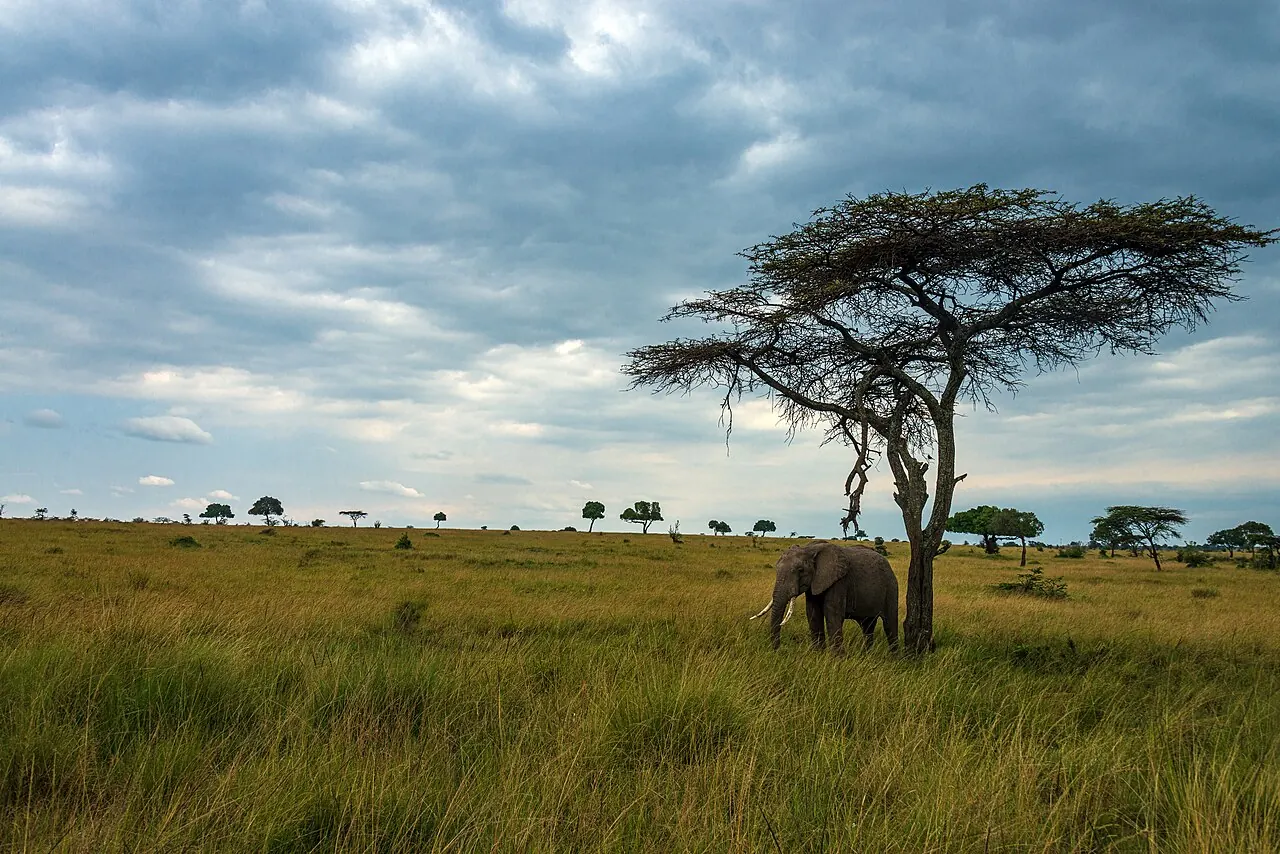

What is Mara North Conservancy?
Mara North Conservancy is a wildlife conservancy of more than 29,170 ha in the north-west of the Greater Mara, bordering the National Reserve along the Mara River and the Oloololo escarpment. It was established on 1 January 2009, when 750 Maasai landowners leased their land to a group of tourism partners; MMWCA now counts 783 landowners.
- Establishedstatus, 2025 map
- 2009started
- 292 km²published area
- 783landowners
- Listed as ID 5 'Mara North Conservancy', type Conservancy, status Established, on MMWCA's Masai Mara Ecosystem-2025 map (produced by WRTI, 2025).2
- Established on 1 January 2009 as a not-for-profit public company leasing land; Mara North Holdings Ltd is described as the governing entity and holds the legal entitlement to all lease contracts between MNC and the landowners (management plan 2018-2022).8
- An IUCN-PAPACO governance case study records Mara North under WDPA listing 555555513, designated 2009, governance type 'shared governance (community-private)', with no IUCN management category reported.16
- The same IUCN-PAPACO study says the leases are held by Mara North Holdings, which acts on behalf of the landowners 'although it is not legally owned by them (an oversight)', and that the Mara North Conservancy company is owned by the tourism partners, each with a board seat.16
- KWCA's national conservancy register lists 'Mara North Conservancy' under the Mara region, Narok County, regional association MMWCA (read Nov 2026).28
- Mara North is one of the Kenyan sites listed by IUCN (2020) as having gone through the GAPA governance assessment for protected and conserved areas.36
Also written: MNC, Masai Mara North Conservancy Limited (name used in 2011 court papers), Mara North Conservancy Ltd, Mara North Holdings Ltd (lease-holding entity), Maasai Mara North Conservancy.


Where is Mara North?
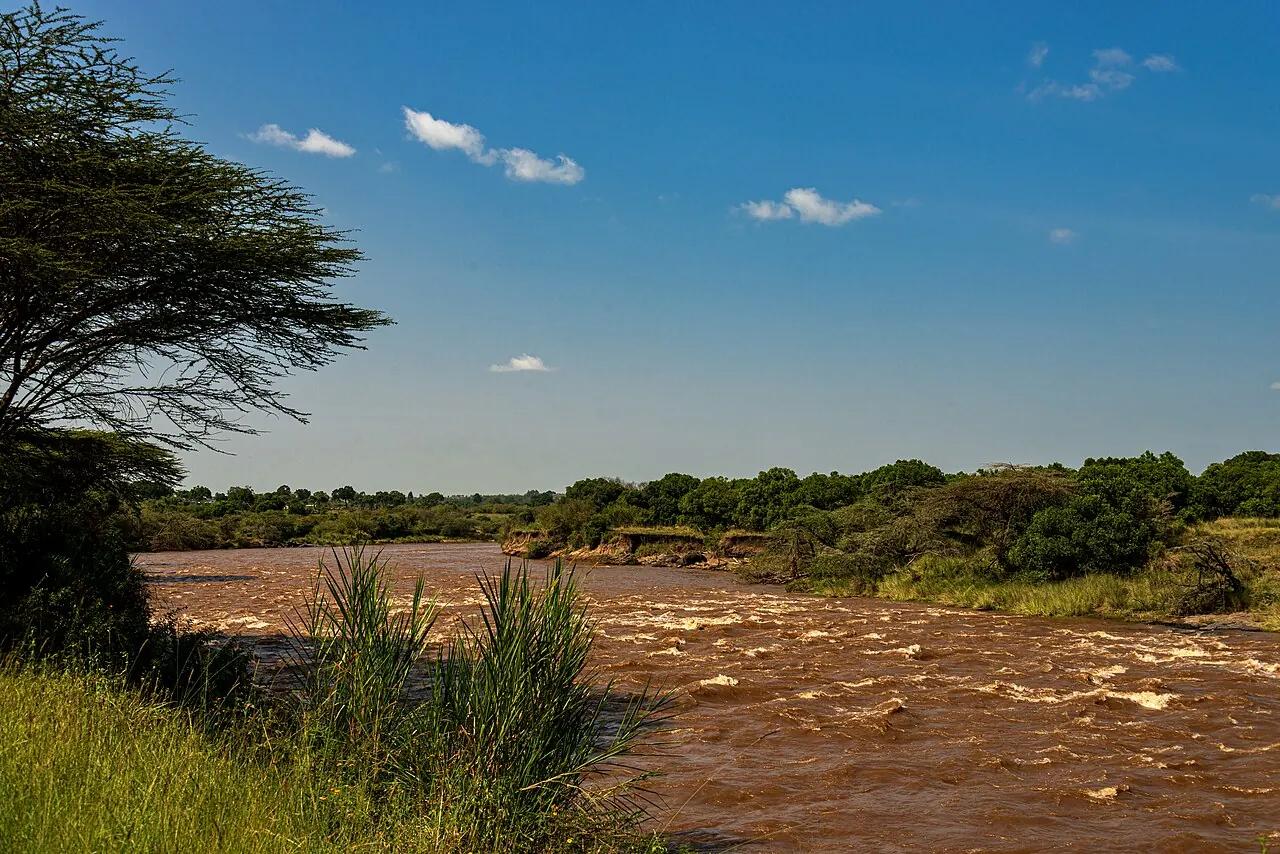
North-western zone of the Greater Mara, bordering the Maasai Mara National Reserve; on former Koiyaki Group Ranch (block one) and the Lemek Hills of Lemek Group Ranch. The Mara River runs along the conservancy's northern border (MNC). Sub-locations Aitong, Lemek and Mararianda; settlements include Aitong, Lemek, Mararianda, Ngosuani, Endonyio Rinka, Olemoncho, Talek, Olareorok and Rekero.15815
Borders and neighbours: Maasai Mara National Reserve, Lemek Conservancy, Olare Motorogi Conservancy.
Administration: Mara ward, Narok West sub-county, Narok County.
- Mara North airstrip: S 01°08.73' E 35°07.48', elevation 5,515 ft; scheduled Safarilink and AirKenya flights from Nairobi Wilson, plus routings from northern Kenya, Amboseli and Mombasa, and charters.10
- The airstrip is 1,800 m, all-weather and maintained by MNC (2017).8
- By road MNC gives about 280 km and 5-6 hours from Nairobi, with Nairobi to Narok taking 2-2.5 hours.10
- The public C13 road from Olulunga to Mararianda passes through the conservancy; MNC headquarters is on the north-west border about 4.5 km from the C13 (HQ 1°09'28.4"S 35°08'41.9"E).8
Who owns and runs Mara North?
- 783 Maasai landowners (MMWCA member text, read Nov 2026)1
- 767 landowners (MMWCA headline figure and MNC 'Innovative Partnerships' page)16
- 'over 1000 Maasai Community Landowners' (MNC 'Our Story' page)3
- 750 landowners at founding (2008-09) and in the December 2017 governance description78
- 690 landowners leasing land plus 137 further individuals receiving part of the monthly payments at their request (December 2017); around 800 individuals received payments8
- Mara North Holdings has 9 directors: 4 landowners elected by the landowners, 4 tourism partners elected by the tourism operators, and an independent chair elected by the 8 directors. The board meets quarterly and elects an Executive Committee every 2 years in December; the AGM is held in December (2017 plan).8
- Board directors and Executive Committee members receive no allowances or sitting fees (2017 plan).8
- Landowners are also represented by a 21-member Landowners Committee (LOC) that meets quarterly, with sub-committees for grazing, settlement and compensation; MNC aims to hold an annual landowners' baraza.8
- Other institutions named in the plan: women's groups, grazing committees, zone committees, compensation committees, a bursary committee, youth groups and settlement committees.8
- MNC's current site describes a Board of Directors elected by tourism partners and landowners with equal representation, working with the Maasai Landowners' Committee.3
- The IUCN-PAPACO study (2017) reports that MNC contracted a separate company to carry out conservation management (law enforcement, grazing management, human-wildlife conflict compensation).16
- The conservancy manager prepares annual work plans and budgets for board approval and an annual compliance report for the AGM; the board is to commission a third-party review at the end of each 5-year plan.8
- Staff listed on the MNC site include a general manager, finance, administrator, conservancy manager, field administrator, database and mapping (lease database/GIS), community liaison officer and grazing officer.12
- MMWCA reports it supported successful conservancy elections in Mara North in 2025.33
- Philip Valentine, General Manager (MNC team page, read 2026)12
- William Kipetu, Conservancy Manager (MNC team page, read 2026)12
- Raphael Kereto, Grazing Officer (MNC team page, read 2026)12
- Stefano Cheli, Chairman of the Directors of MNC (2018 management plan)8
- Francis Nkoitoi, Chairman of the Landowners Committee (2018 management plan)8
How do leases and payments work in Mara North?
- Member camps guarantee fixed monthly lease payments to landowners 'regardless of tourism ebbs and flows' in return for the right to game-drive in the conservancy; payments are not tied to the number of conservancy tickets sold.478
- 2017 brochure: 700 lease agreements signed for 5-15 years; the 12 member camps pay US$154,800 per month (just under US$2M a year); landowners receive US$42 per hectare, unencumbered by management or directors' fees.7
- 2018-2022 plan: each tourism partner pays a fixed monthly fee per bed, totalling US$1.8 million per year, which covers all lease payments plus management, administration and legal costs.8
- Payments go monthly to individual bank accounts, which the plan says lets landowners access loans and pay for education, health and veterinary services; landowners hosting a camp earn extra under direct agreements with that tourism partner.8
- MNC's 'Our Story' page describes conservancy fees collected by member camps and forwarded to the conservancy to support the monthly lease payments and land management.3
- Bedelian (2012) gives MNC lease rates of US$33 per ha per year under 5-year contracts and US$40 per ha per year under 15-year contracts (c. 2011-12).15
- The IUCN-PAPACO study (2017) reports a 15-year lease on most plots at a fixed USD 48 per acre, irrespective of tourism numbers.16
- A 2021 peer-reviewed study gives benefit distribution as USD 1.3 per 0.4 ha per month, with lease conditions barring land sale or subdivision, settlement outside designated locations, poaching, deforestation and charcoal burning.21
- During COVID-19, Mara North was one of four conservancies that drew affordable loans from the African Conservancies Fund (Conservation International with MMWCA, Dec 2020 to Dec 2022) so tourism partners could meet lease obligations.23
- The 2018 plan states the payment model 'is evolving' towards more transparency and coordination across conservancies.8
Lease terms differ between conservancies and change at renewal. Read landowner and leaseholder rights before signing or renewing, or ask for a baraza to go through a lease together.
Can livestock graze in Mara North?
- MNC runs a cattle grazing plan with grazing committees; grazing in the conservancy is reserved for landowners leasing land to MNC.8
- The conservancy is divided into 4 zones, each split into grazing blocks opened at set times according to forage, with one grazing committee per zone.8
- Managed rotational grazing runs year-round; in the low tourism season the conservancy is occasionally overrun by up to 30,000 head of livestock, against an estimated carrying capacity of about 12,000 head with wildlife taken into account (2017).8
- Only cattle may graze in the conservancy; sheep and goats are excluded. MNC ran a breeding demonstration crossing Zebu with improved Boran cattle.818
- MNC maintains a conservancy herd in predator-proof mobile bomas with the landowner committees.6
- Conservation International (2024) reports that when the first Mara conservancies were set up in 2009 cattle grazing was prohibited; after landowners objected, Mara North and others began adopting planned livestock grazing for savanna restoration from 2018 (per MNC grazing manager Raphael Kereto).24
- A 2023 study describes rotational grazing in MNC with cattle-free zones of about 15 km2 each; sheep and goats graze only within settlement areas.19
- In 2023 a pilot restoration with mobile bomas was set up at the eastern tip of Mara North (MPCP with Mara Grassroot Movement).25
- The One Mara Carbon Project held a livestock count at Mara North in 2025, introducing standard procedures on body condition, herd structure and counts.33
Grazing rules are made by each conservancy with its landowners. Our page on grazing and conservancy rules sets out how rules can protect wildlife without harming the Maasai pastoral way of life.
What wildlife lives in Mara North, and what is its corridor role?
Wildlife in Mara North
- MNC records about 550 bird and 95 mammal species.5
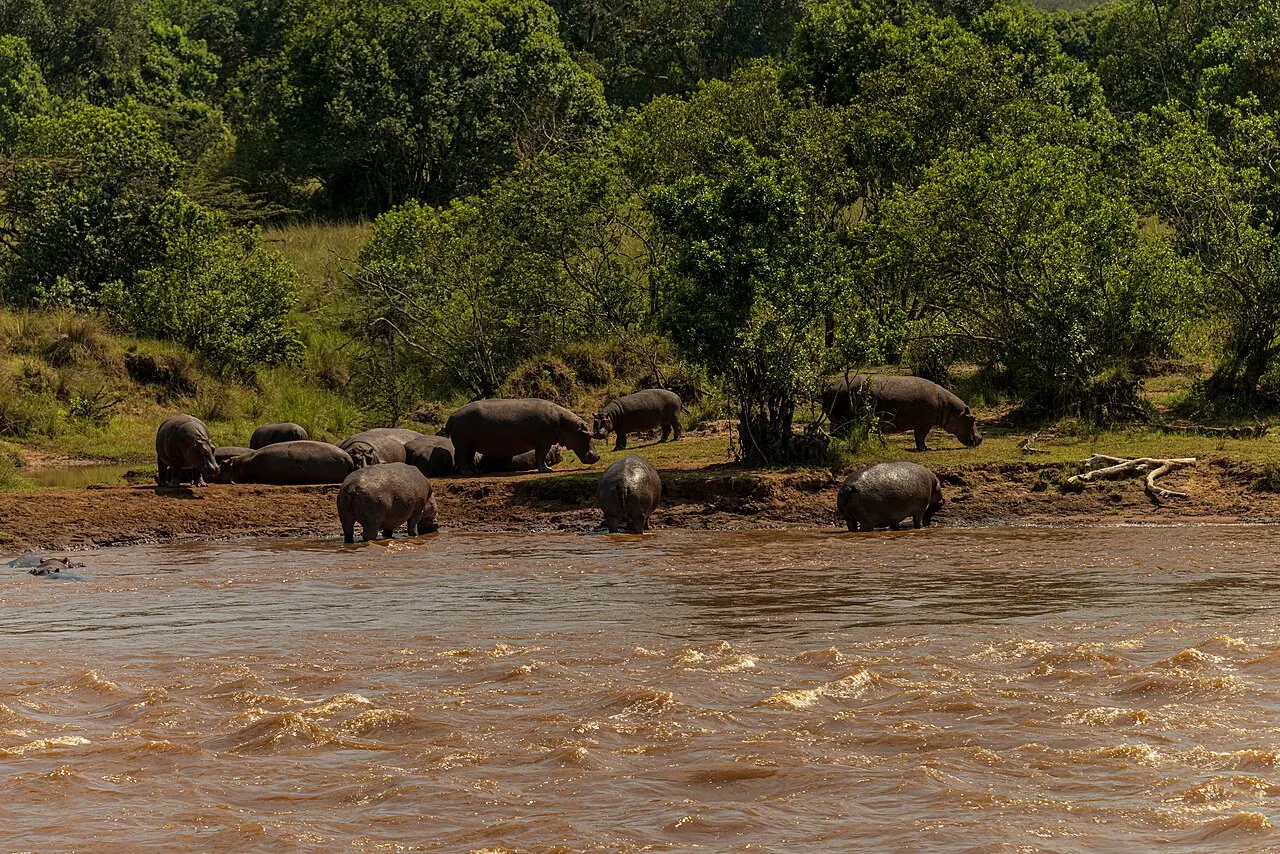
- Species MNC treats as critical: resident and migratory western white-bearded wildebeest; lion, leopard and cheetah; African elephant; black rhino; vultures (Rueppell's, Nubian, hooded, white-backed). Also buffalo, zebra, hippo, crocodile, Maasai giraffe, eland, spotted hyena, topi, warthog.5
- Leopard Gorge in the heart of the conservancy is the setting of BBC Big Cat Diaries and National Geographic documentaries.3
- Blackburn et al. (2016) estimated a lion density of 8.15 per 100 km2 in MNC (average 2008-2013), with the River and Cheli prides studied there.20
- MNC's 2025 blog follows a resident leopard, Ndoto, and her two cubs.13
Migration corridor in Mara North
- MNC works to reclaim migratory corridors by encouraging removal of fences, protecting dispersal areas, and reducing land subdivision and sales through leases.5
- 2018-2022 goals: halt and reclaim fenced land by 60%, reduce land subdivision and sales by 40%, reduce land use incompatible with conservation by 50%.8
- Aarhus University's Maasai Mara Science and Development Initiative mapped fencing in the 30,000 ha Mara North area from satellite images (1976-2016), feeding the 2017 Scientific Reports paper that warned accelerating fencing since 2014 threatened the Greater Mara.3432
- Kenyans.co.ke reported in August 2026 that Narok County approved a Maasai Mara Game Reserve Expansion Bill whose conservancy buffer framework names Mara North among the conservancies affected.38
Research in Mara North
- Partners named by MNC include the Mara Elephant Project, the Mara Predator Conservation Programme (Kenya Wildlife Trust) and Living with Lions.613
- Herrik et al. (2023, Journal of Applied Ecology) found cattle effects on wild herbivores in MNC range from facilitation to competition, and that cattle-free zones keep displaced species present.19
- Blackburn et al. (2016) found lion survival was hit by settlements that were not conservancy members, while member settlements had no effect, and lion densities in the Mara conservancies had risen 2.6-fold since 2003.20
- MNC employs a database and mapping officer handling the lease database and GIS.12
Why corridors matter for the whole Mara: opening the migration corridors.
Which camps are in Mara North?
| Source | |||
|---|---|---|---|
| Basecamp Mara Bush Houses | Saruni Basecamp | – | 13 |
| Elephant Pepper Camp | Elewana Collection | – | 13 |
| Karen Blixen Camp | Karen Blixen Group | – | 13 |
| Kicheche Mara Camp (Kicheche Mara North) | Kicheche Camps | – | 1326 |
| Mara Expedition Camp | Great Plains Conservation | – | 13 |
| Offbeat Mara Camp | Offbeat Safaris | – | 13 |
| Offbeat Riding Safaris | Offbeat Safaris | – | 13 |
| Hemingways River Camp | Hemingways Collection | – | 13 |
| Royal Mara Safari Lodge | – | – | 13 |
| Safaris Unlimited | Safaris Unlimited Africa (riding) | – | 13 |
| Saruni Mara (Saruni Basecamp) | Saruni Basecamp | – | 13 |
| Alex Walker's Serian | Serian | – | 13 |
- 2017: 219 beds on 25,438 ha leased, a ratio of 287 acres per bed, below the agreed minimum target of 142 ha (350 acres) per bed; MNC sought to lease more land to reach the target.8
- MNC's Conservation page: 10 permanent camps and 2 mobile (horseback) camps; current density 336 acres per bed, aspiring to 350 acres per bed (the page prints '350 beds/acre').5
- 2017: Mara Plains held the right to 14 beds, paid for 6 and was not using the conservancy.8
- The Greater Mara map (David and Rosemary Watson, 2013) hosted by MNC lists general conservancy principles: about 1 tent per 700 acres (280 ha), camps of no more than 12 tents, temporary canvas structures.14
What can visitors do in Mara North, and what does it cost?
- No more than 5 vehicles at a sighting; others wait at least 100 m away; each vehicle has 10 minutes before giving way, but the vehicle that found the sighting may stay indefinitely.9
- Only one vehicle may be moving (engine running) at a stationary sighting, and guides must announce before moving.9
- Keep at least 20 m (about 4 vehicle lengths) from animals; if an animal gets up or moves off you are too close.9
- No off-road driving except to view wildlife; for the Big Five a vehicle may leave the track by the shortest route and keep 20 m away. Keep out of thickets.9
- Speed limit 40 km/h.9
- Night drives only in designated areas, with red filters, back in camp by 10 pm; spotlights off while a predator stalks prey; cubs may be viewed at night only from 4 months old.9
- Guests stay in the vehicle except at picnic and sundowner sites; no standing on roofs near wildlife and no sitting on roofs at predator sightings; legs may not dangle outside.9
- No flushing animals from cover, shouting, whistling or throwing objects; keep voices low, minimise VHF chatter, phones only in emergencies or out of sight of other vehicles; no littering or feeding animals.9
- Vehicles must not approach walking or riding safaris.9
- Game-drive tracks (about 270 km) are for member properties only; the public C13 road (Olulunga to Mararianda) crosses the conservancy.8
- day game drives
- full-day game drives
- night game drives (designated areas)
- bush walks
- horseback riding safaris
- cultural visits to manyattas
- bird watching
- hot-air balloon safaris
- bush dining
How conservancy fees compare with Reserve entry: Mara conservancy fees and visitor rules.
How does Mara North support its community?
- Member camps have set up schools and health facilities (maternal and child health, HIV/AIDS, TB, malaria, waterborne disease) and women's income projects such as handicrafts.4
- 2017: member camps employed about 420 staff, 61% from the local area; 28 were women (55% local). At least 35 rangers were employed, at least 75% from the MNC community.8
- Members can access a loan facility and school-fee bursaries; a 2025 study notes these can be withheld for grazing violations.22
- A compensation scheme for livestock predation and a livestock breeding programme are offered to members (2021 study).21
- Local livestock markets named by MNC: Aitong and Lemek (Thursdays), Mararianda and Talek (Wednesdays).4
What challenges does Mara North face?
- The 2018 plan lists threats including land subdivision and sale, fencing, incompatible land use, charcoal burning, firewood collection, and seasonal overgrazing.8
- COVID-19: tourism revenue fell more than 90% and tourism investors could not meet lease obligations; Conservation International reports loans kept payments and ranger salaries going. A Mara North landowner told CI that without the fund 'the conservancies would have disintegrated'.2324
- A 2020 Basecamp Foundation survey of Mara conservancy landowners (including Mara North) found most did not expect leases to continue without tourism, and some warned reduced income could push grazing, settlement or land sales.35
- In Mutaka Ole Mpooya v Masai Mara North Conservancy Ltd & another (High Court Nakuru, ruling 17 June 2011), a registered owner alleged MNC used his parcel without consent; he and six others had formed Masai Mara Leopard Gorge Conservancy Ltd. The court overruled MNC's preliminary objection; the final outcome was not found.29
- Court of Appeal ruling (5 Feb 2016) in Monarchs Lodge Safari Ltd v Mara North Holdings Ltd & 4 others concerned ownership of a parcel whose owner had leased it to Mara North on 20 March 2012; the full ruling was not read.30
- A 2025 study found MNC members more supportive of grazing rules than members of two comparison conservancies because of regular payments, but also cited fines deducted from monthly lease payments for illegal grazing.22
- MERC (2014) reported community concern that Mara conservancies including Mara North had removed tens of thousands of acres of grazing land from community use.39
- In 2023 a lioness was speared near the Olare Motorogi-Mara North border while her group raided a boma; one person was seriously injured.25
We report what sources say, from every side. Claims made by one party are reported as claims, not as findings; only a court decides who is right, and interim court orders are not final decisions. If you are named here and want your response added, or think something is wrong, write to hello@maraconservation.org and we will review it within 14 days. If you live with one of these issues, a baraza is where it can be raised and recorded.
History of Mara North
- 2008Founding tourism members approach Maasai leaders; 750 landowners agree to lease land.7
- 2009
- 2011High Court ruling in the Mutaka Ole Mpooya land-use petition against MNC.29
- 2016Court of Appeal ruling in the Monarchs Lodge Safari land-parcel dispute with Mara North Holdings.30
- 2017December: 25,594 ha leased from 750 landowners; 219 beds.8
- 2018
- 2020COVID-19 halts tourism; African Conservancies Fund loans run Dec 2020 to Dec 2022.23
- 2023Pilot mobile-boma restoration at the eastern tip of the conservancy.25
- 2025
- 2026August: Narok County approves a Maasai Mara expansion bill naming Mara North among buffer conservancies (media report).38
Where do sources disagree about Mara North?
Published figures do not always match. We show each one with its source instead of picking one.
| Topic | What the sources say | Sources |
|---|---|---|
| area | >29,170 ha (MMWCA text) 28,487 ha (MMWCA headline) >29,000 ha / ~73,000 acres (MNC Our Story) 28,486 ha (MNC Conservation) 25,594 ha leased (Dec 2017 plan) 28,010 ha (KWCA 2016) 310 km2 (IUCN-PAPACO 2017) 351 km2 (GMME plan 2023 estimate) 29,947 ha (Ecological Restoration 2021) ~300 km2 (Herrik 2023) 30,000 ha (Bedelian 2012) | 1358 |
| number of landowners | 783 (MMWCA text) 767 (MMWCA headline; MNC Innovative Partnerships) over 1000 (MNC Our Story) 750 (founding; 2017 plan) 690 leasing plus 137 payees (Dec 2017) over 800 (Ecological Restoration 2021) more than 900 (Herrik 2023; Bedelian 2012) about 900 (Environmental Management 2025) 788 (MERC 2014) | 1637 |
| tourism partners | 12 (10 permanent camps and 2 riding outfits) (MMWCA) 12 (6 camps, 3 lodges, 3 riding outfits) (MNC Our Story) 13 paying member camps/lodges/riding outfits (2017 plan) 13 tourism camps (Herrik 2023) 12, initially 11 (IUCN-PAPACO) 10 tourism investors (Bedelian 2012) | 13819 |
| minimum viewing distance | 20 m (current Game Drive Etiquette page) 25 m (2017 brochure) | 97 |
| lease rate | US$42 per ha (2017 brochure) US$33/ha/yr (5-yr) and US$40/ha/yr (15-yr) (Bedelian 2012) USD 48 per acre (IUCN-PAPACO 2017) USD 1.3 per 0.4 ha per month (Ecological Restoration 2021) | 7151621 |
| how lease money is raised | fixed monthly fee per bed paid by each tourism partner (2017 plan; Innovative Partnerships page) conservancy fees collected by camps and forwarded to MNC (Our Story page) | 863 |
| conservancy fee 2026 | US$130 adult / US$65 child per night (Kicheche rate sheet) US$150 adult / US$75 child per day (African Spice Safaris reseller page) | 2627 |
| bird species | 550 (MNC Conservation page) 570 recorded (MNC Activities page) | 511 |
Questions about Mara North
Can you do a night game drive in Mara North Conservancy?
Yes. Night drives are allowed only in designated areas, with red filters on spotlights, and vehicles must be back in camp by 10 pm. Cubs may only be viewed at night once they are 4 months old.9
How much is the Mara North Conservancy fee?
How many vehicles are allowed at a sighting in Mara North?
Five. Other vehicles wait at least 100 m away, and each vehicle gets 10 minutes before giving way; the vehicle that found the sighting may stay.9
Who owns Mara North Conservancy?
How are Mara North landowners paid?
Can cattle graze in Mara North Conservancy?
How do you get to Mara North Conservancy?
Fly to Mara North airstrip on Safarilink or AirKenya from Nairobi Wilson, or drive about 280 km (5-6 hours) via Narok.10
Which camps are in Mara North Conservancy?
MNC lists Basecamp Mara Bush Houses, Elephant Pepper, Karen Blixen Camp, Kicheche Mara, Mara Expedition Camp, Offbeat Mara and Offbeat Riding Safaris, Hemingways River Camp, Royal Mara Safari Lodge, Safaris Unlimited, Saruni Mara and Serian.13
Sources for this profile
- Mara Conservancies (member tabs): Mara North Conservancy · MMWCA
- Masai Mara Ecosystem-2025 map (Ecosystem-Map-2026.pdf) · MMWCA / WRTI · 2025
- Our Story · Mara North Conservancy
- Community · Mara North Conservancy
- Conservation · Mara North Conservancy
- Innovative Partnerships · Mara North Conservancy
- Promoting Partnerships in Conservation (brochure) · Mara North Conservancy · 2017
- Mara North Conservancy Management Plan 2018-2022 (final draft) · Mara North Conservancy · 2018
- Gamedrive Etiquette · Mara North Conservancy
- How to Get There · Mara North Conservancy
- Activities · Mara North Conservancy
- Our Team · Mara North Conservancy
- Home page and Member Camps · Mara North Conservancy
- The Greater Maasai Mara map (David and Rosemary Watson, 2013), hosted by MNC · Mara North Conservancy · 2013
- Bedelian, C. Conservation and ecotourism on privatised land in the Mara, Kenya (LDPI Working Paper 9) · Land Deal Politics Initiative · 2012
- Kenya non-state protected area governance report (Mara North case study) · IUCN PAPACO · 2017
- State of Wildlife Conservancies in Kenya Report 2016 · KWCA · 2017
- Greater Maasai Mara Ecosystem Management Plan 2023-2032 · County Government of Narok / MMWCA / KWS · 2023-02
- Herrik et al. Rotational grazing with cattle-free zones supports the coexistence of cattle and wild herbivores in African rangelands. J. Appl. Ecol. 60(10) · British Ecological Society / Wiley · 2023-08-14
- Blackburn et al. Human-wildlife conflict, benefit sharing and the survival of lions in pastoralist community-based conservancies. J. Appl. Ecol. · British Ecological Society / Wiley · 2016
- Exploring Gender Equity in Ecological Restoration: The Case of a Market-Based Program in Kenya. Ecological Restoration 39(1-2) · University of Wisconsin Press · 2021
- What Drives Compliance with Rules in Community-Based Conservation? Lessons from Maasai Mara, Kenya. Environmental Management · Springer · 2025-12
- When Pandemic Hit Maasai Mara, New Fund Stepped in to Stabilize Conservancies · Conservation International · 2023-07-06
- In Kenya, global crisis sparked 'a new way to do conservation' · Conservation International · 2024-11-14
- Mara Predator Conservation Programme Annual Report 2023 · Kenya Wildlife Trust / MPCP · 2024-03-18
- 2026 Kicheche Camps Rack Rates · Kicheche Camps (member camp) · 2025-06-05
- Saruni Mara Lodge (reseller page with conservancy fees) · African Spice Safaris (reseller)
- KWCA conservancy register entry: Mara North Conservancy (WP REST) · KWCA · 2026-08-24
- Mutaka Ole Mpooya v Masai Mara North Conservancy Limited & another [2011] eKLR (HC Nakuru JR 34 of 2010) · High Court of Kenya (via SheriaHub) · 2011-06-17
- Monarchs Lodge Safari Limited v Mara North Holdings Limited & 4 others (CA Civil Application 221 of 2015) · Court of Appeal of Kenya (via judy.legal) · 2016-02-05
- OpenStreetMap relation 11184077 'Mara North Conservancy' (Narok West) and way 593889887 'Mara North Conservancy Airstrip' · OpenStreetMap contributors (via Nominatim)
- Løvschal et al. Fencing bodes a rapid collapse of the unique Greater Mara ecosystem. Scientific Reports 7: 41450 · Nature Publishing Group · 2017-01-25
- End-of-Year Newsletter 2025 · MMWCA · 2025-12-22
- Mapping accelerating fencing processes in the Greater Mara (project page) · Aarhus University, Maasai Mara Science and Development Initiative · 2026-03-17
- Impact of COVID19 on Landowners of Mara Conservancies (survey report) · Basecamp Foundation Kenya / STTA · 2020-08-18
- State of protected and conserved areas in Eastern and Southern Africa · IUCN · 2020
- Lemek Conservancy home page ('Bordering Mara North and Olchorro Oirowua Conservancies') · Mara Lemek Conservancy (site) · 2026
- County Unveils New Maasai Mara Expansion Plan to Address Human-Wildlife Conflict · Kenyans.co.ke · 2026-08-05
- The Impact of Conservancies on Maasai Communities in the Region Surrounding the Maasai Mara Game Reserve · Maasai Education, Research and Conservation Institute (MERC) · 2014-12-15
What we could not confirm (8)
- No official MNC statement of the current conservancy fee; figure taken from a member camp's 2026 rate sheet.
- Bed or tent counts per member camp not taken from operator pages; only the 2017 total of 219 beds is sourced.
- No management plan after 2018-2022 found; current lease rate per acre not published by MNC.
- Nearest Maasai Mara National Reserve gate to the conservancy not stated by an official source.
- Outcomes of the 2011 Mpooya petition and the 2016 Monarchs Lodge Safari case not found.
- No IUCN Green List status or conservancy-level awards found (Ecotourism Kenya Gold rating applies to Saruni Mara, a camp).
- MNC FAQ page returned 404 (Nov 2026).
- Current ranger numbers not found (2017 plan: minimum 35).
Researched 22 November 2026. Corrections from Mara North landowners, managers and residents are welcome: contact us.
Bring it to a baraza
Landowners, leaseholders, residents, camps and conservancy managers: a baraza is where questions about leases, grazing, corridors and wildlife get answered in the open, in Maa, Kiswahili or English. Ask us to help organise one in your village.