
What is MaraConservation.org?
Maasai Mara Conservation CBO: a citizen-led, landowner-led community-based organisation of Narok West residents in the Greater Mara, Narok County, Kenya, with its office at Nenkai Plaza, Narok. We organise community barazas, publish independent profiles of every Mara conservancy, and work to reopen migration corridors so that wildlife, tourism and Maasai families can keep sharing the land.
The Masai Mara National Reserve is only part of the Mara. Much of the wildlife that visitors come to see spends part of the year on land outside the Reserve that belongs to Maasai families. Since the group ranches around the Reserve were subdivided, that land has been leased to conservancies, fenced, farmed, built on or sold. What happens to it decides whether the Mara stays wild.
That is why we believe conservation here has to be led by the people who own and live on the land. We are not an outside agency. Our members are residents of Narok West, and the questions we work on are the ones our families face: what a lease really says, whether cattle can graze in the dry season, who pays when a lion takes a cow, and whether a fence across a corridor helps anyone.
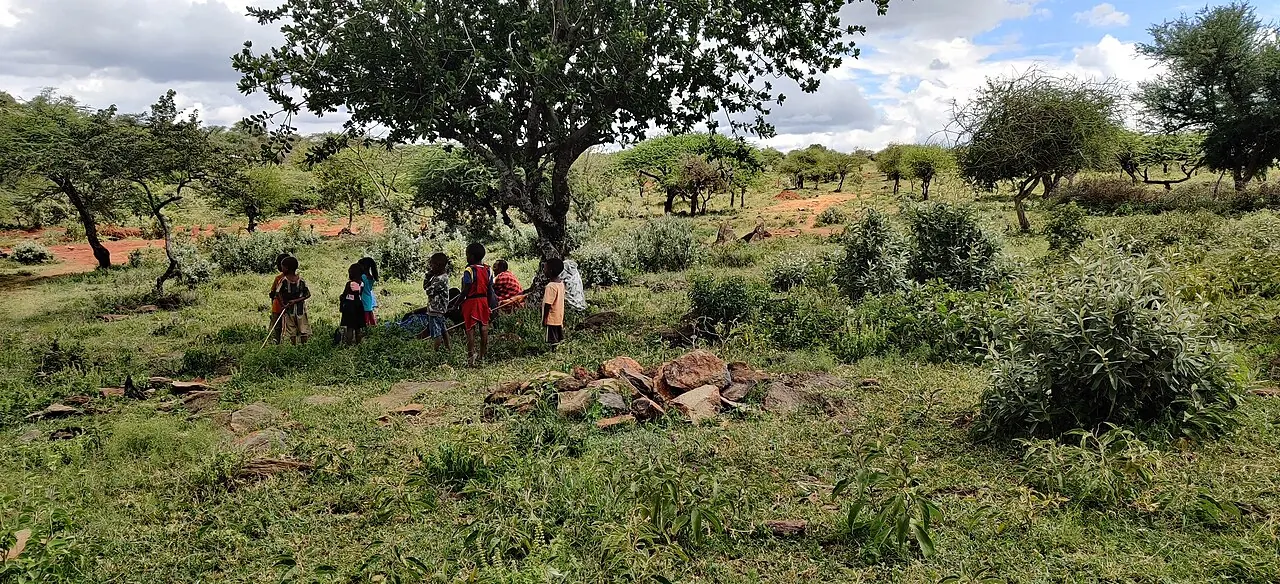
Photo: Yganyana / Wikimedia Commons, CC BY-SA 4.0
Why should Mara conservation be led by citizens and landowners?
Because the land outside the Reserve is privately owned. Conservancies only last while landowners choose to keep leasing to them, so the model survives only if landowners and residents understand it, shape its rules and benefit from it fairly.
The Mara conservancy model is a bargain. Landowners pool their land, leave it open for wildlife and receive lease payments from tourism. Camps get space, quiet and wildlife. The whole ecosystem keeps its dispersal areas and corridors. If the bargain stops working for the families who own the land, they will fence, farm or sell. No law, donor or camp can keep a corridor open against the will of its owners.
So we put landowners and residents at the centre. We explain how conservancies work, publish what each one says about itself and what independent sources say, and bring people together to talk about it in their own language. A model people understand and help shape is one they will defend.
What does MaraConservation.org do?
Five things: we organise barazas, publish independent conservancy profiles, support the reopening of migration corridors, push for conservancy rules that respect indigenous life, and help landowners, residents, investors and conservancies talk to each other.
- Community barazasOpen meetings in villages across Narok West, in Maa, Kiswahili or English, on leases, grazing, corridors and wildlife conflict. How barazas work.
- Independent profilesA sourced profile of every conservancy on MMWCA’s 2025 ecosystem map: who owns it, how leases work, grazing rules, wildlife and disputes. All conservancies.
- Open corridorsMapping where wildlife moves, explaining what fences cost the ecosystem, and supporting landowners who keep their land open. Migration corridors.
- Fair rulesGrazing plans and conservancy rules that protect wildlife without harming pastoral life. Grazing and conservancy rules.
- Rights for everyoneA charter for landowners, leaseholders, investors, residents, workers and visitors. The stakeholder charter.
What do we stand for?
Coexistence, respect for the Maasai way of life, open corridors, fair rights for every stakeholder, and evidence over rumour.
Living alongside wildlife
The Maasai have shared the Mara with wildlife for generations. We do not believe the answer is to move people out. We want families to keep living on their land, with cattle and wildlife on the same plains, and with real help when wildlife causes losses. See Maasai pastoralism and conservation and living with wildlife.
Rules that respect how we live
Conservancy rules on grazing, settlement, fencing and movement should be made with the people they affect, and should not stop families from herding, moving livestock in the dry season, holding ceremonies or reaching water, schools and markets. Where a rule harms a household, there should be a fair way to say so and change it.
Keeping the land connected
Wildlife needs to move between the Reserve, the conservancies and the wider rangelands. Every new fence across a route makes the Mara smaller. We support landowners and conservancies who keep land open, and we look for ways to make open land pay. See migration corridors.
Everyone with a stake is respected
Landowners, leaseholders, tourism investors, general residents, workers and visitors all have rights and duties in the Mara. We set them out in our stakeholder charter and use barazas to settle where they clash.
Facts with their sources
Every conservancy profile cites its sources: the conservancy’s own pages, MMWCA, government records and published research. Where sources disagree, we show both. Where we could not confirm something, we say so. Corrections are welcome on the get involved page.
Is MaraConservation.org the same as MMWCA or a conservancy?
No. We are independent. We are not the Maasai Mara Wildlife Conservancies Association (MMWCA), we do not manage any conservancy, we do not sell safaris, and we do not campaign for any political party.
MMWCA is the membership association of the Mara conservancies, and its website, maraconservancies.org, is one of our main sources. We read its ecosystem map, strategic plan and newsletters and link to them in our reports library. Conservancy managements, camps and researchers publish a great deal too, and we cite them. None of them writes or approves our pages. If a conservancy or MMWCA finds an error, we will correct it and say so.
- We do not take a side between conservancies, camps or landowner groups.
- We do not buy, sell or broker land or leases.
- We do not speak for any conservancy, and none speaks for us.
Who are our members, and how do we decide what to do?
Our members are the residents of Narok West: landowners and leaseholders, herders and farmers, women and youth, people working in tourism and people who are not. The issues we take up come from barazas.
Anyone who lives in Narok West can take part. Barazas set our agenda: when the same concern comes up again and again, in different villages, it becomes something we research, explain and raise with the people who can act on it, such as conservancy committees, camps, ward administrators or Narok County. Read more about Narok West and its conservancies.
Want to join, help organise a baraza or correct a profile? Start on get involved.
Questions about MaraConservation.org
Who runs MaraConservation.org?
Maasai Mara Conservation CBO, a community-based organisation run by residents and landowners of Narok West in the Greater Mara. Our office is at Nenkai Plaza, Narok, Kenya, and you can write to us at hello@maraconservation.org or call or WhatsApp 0781 776 342.
Is MaraConservation.org part of MMWCA?
No. MMWCA, the Maasai Mara Wildlife Conservancies Association, is a separate organisation. We use its published reports as sources and link to them.
Can I join if I do not own land?
Yes. Leaseholders, tenants, herders, women, young people and people working in tourism all have a stake in how the Mara is managed, and all are welcome at barazas.
Are you against conservancies?
No. We want the conservancy model to last. That means it has to stay fair to the landowners and residents who make it possible, so we support what works and speak openly about what does not.
Bring it to a baraza
Landowners, leaseholders, residents, camps and conservancy managers: a baraza is where questions about leases, grazing, corridors and wildlife get answered in the open, in Maa, Kiswahili or English. Ask us to help organise one in your village.