
What is a baraza?
A baraza is an open public meeting, held in the community, where people affected by a decision come together to hear, ask and speak. In Kenya barazas are called by chiefs, county officials and community groups; ours are about conservation and the conservancies on our land.
Barazas are an old and familiar way of deciding things in Kenya, and they fit the Maasai custom of elders and the community sitting together to talk a matter through. They are not lectures. A good baraza has someone who explains the facts, time for every voice, and a record of what was said and agreed.
Kenya’s Constitution lists the participation of the people among the national values in Article 101, and requires public participation in county government and in managing the environment2. The County Governments Act protects timely access to information and the right to challenge decisions, with emphasis on women, youth and marginalised groups3, and the High Court has said participation must be “real and not illusory”, naming public barazas among the fora counties should use1.
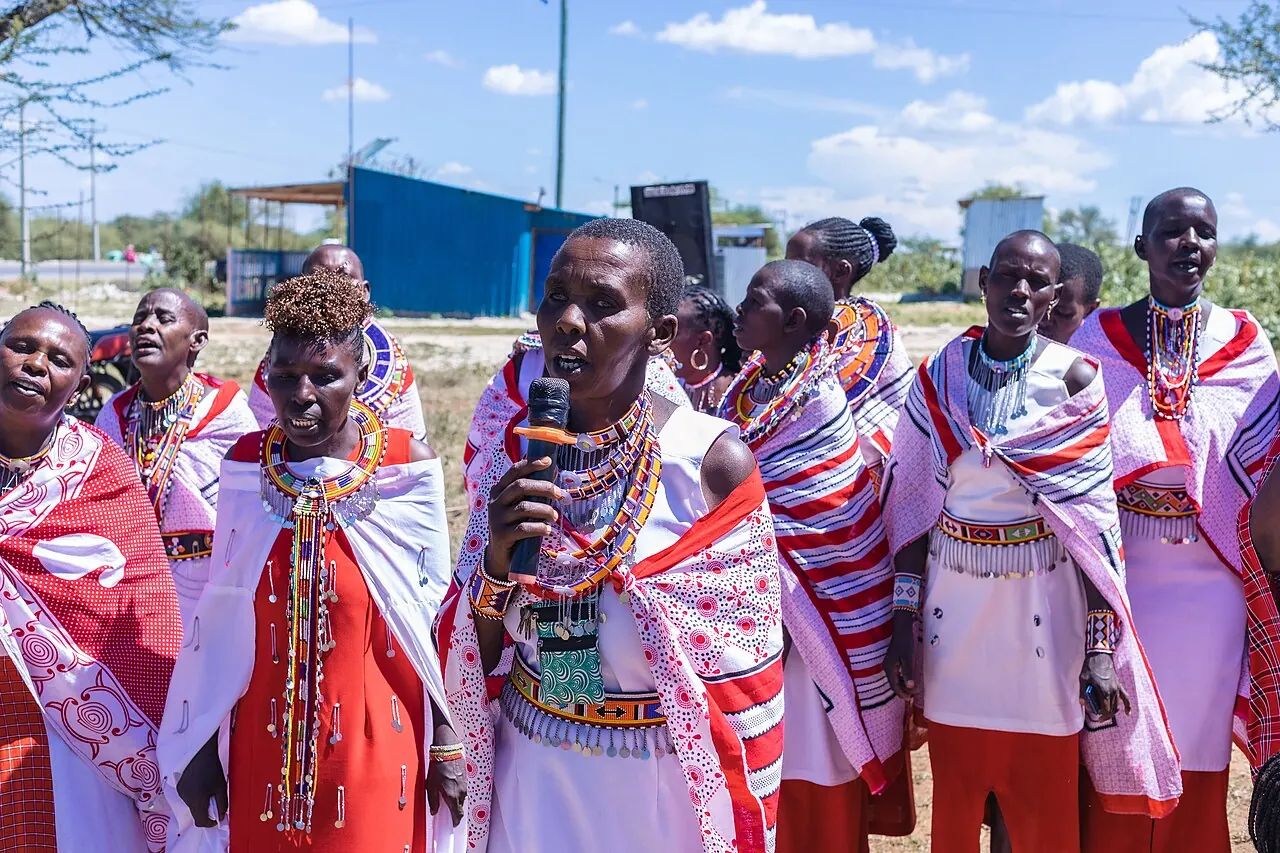
Photo: Mark Myles Mugambi / Wikimedia Commons, CC BY-SA 4.0
Why does MaraConservation.org organise barazas?
To educate and listen: so every Narok West resident understands how the Mara conservancy model works, can find ways to keep it alive, and can make sure its rules do not harm or hinder the indigenous way of living.
- Understand the modelHow leases, payments, bed limits and conservancy rules work, explained plainly. Background: how Mara conservancies work.
- Live alongside wildlifeShare what works for keeping cattle, crops and children safe, and what help exists when wildlife causes losses. See living with wildlife.
- Rules that fit our livesCheck that grazing, settlement and movement rules leave room for pastoral life, and raise the ones that do not. See grazing and conservancy rules.
- Respect everyone’s rightsLandowners, leaseholders, investors, residents and workers each have rights; barazas are where they are balanced. See the stakeholder charter.
- Keep the corridors openTalk through fences, land sales and the routes wildlife uses before the decisions are made. See migration corridors.
Have barazas shaped conservation in the Mara before?
Yes, from the start. The first Mara conservancies were agreed in barazas, predator-conflict committees are elected in them, and the county’s new conservancies law defines community participation as consultation through public barazas.456
- When Olare Orok was set up, a former chief and community leaders visited every boma and held more than 30 meetings over six months before the landowners agreed4.
- Winning over Olderkesi’s members took hundreds of community meetings over many years; leaders shape opinion but do not decide for the community7.
- In 2024 the Mara Predator Conservation Programme formed ten conflict-response committees through barazas, with 50 community representatives per zone choosing ten people each5.
- MMWCA consulted on the One Mara Carbon Project in 2025 through Maa-language radio, public barazas and meetings with elders, women and youth, under free, prior and informed consent8.
- The Greater Mara Management Plan commits to quarterly public forums on securing corridors and dispersal areas9.
MMWCA (Equator Initiative profile); Naboisho
Conservancies are democratic institutions formed through an open, participatory process and have added women to boards.1011
Oduor 2020; IUCN PAPACO assessment
Seats for women do not equal voice; decision-making and lease money stay with men and connected elites.1213
High Court, quoted in County Public Participation Guidelines
Participation must be 'real and not illusory', using barazas, local radio and other fora people actually attend.1
What do our barazas discuss?
Whatever the community raises. These are the topics that come up most often in the Mara.
Leases and payments
How long a lease runs, how payments are calculated and paid, what happens at renewal, whether payments rise with tourism, and what a landowner gives up and keeps. We go through real clauses and the questions to ask. Read landowner and leaseholder rights first.
Grazing and conservancy rules
When and where livestock may graze, how grazing plans are made, dry-season access, fines and enforcement, and how herders can shape the rules. Background: grazing and conservancy rules.
Corridors and fences
Where wildlife crosses a village’s land, what a new fence would cut off, and what would make it worth keeping land open. Background: migration corridors and threats to the Mara.
Human-wildlife conflict
Livestock killed by predators, crops raided by elephants, injuries, how to report them, what the law says about compensation, and which protections work. Background: living with wildlife.
Land, title and succession
What happens to a lease when a landowner dies or land is subdivided among children, the risks of selling land in a conservancy, and how families can plan. Background: conservancy law.
Women and youth in conservancies
Who sits on conservancy committees, who receives lease payments in a household, jobs for young people as rangers, guides and camp staff, and women’s enterprises. We hold separate sessions when people prefer to speak among themselves first.
Who takes part in a baraza?
Everyone with a stake: landowners, leaseholders, general residents, herders, women, young people, elders, camp and lodge investors, conservancy managers and rangers, and local administration.
Landowners and leaseholders
- Bring lease documents and questions
- Hear how other families negotiated
Herders and residents
- Raise grazing and movement problems
- Report conflict losses and fences
Camps and investors
- Explain their commitments
- Hear community concerns directly
Conservancy managers
- Explain rules and the reasons for them
- Take questions and follow up
Local leaders
- Chiefs, elders and ward administration
- Keep the meeting open and fair
How do we organise a baraza?
In five steps, from your request to a written follow-up.
- You askA resident, group, conservancy or camp asks for a baraza, using the form below or by contacting us.
- We agree the topic and placeWith local elders and the area chief we agree the topic, date, venue and language, and make sure the meeting does not clash with market days or ceremonies.
- Everyone is invitedWe invite all sides, including people who disagree, and make a special effort to reach women, young people and households far from the road.
- The barazaSomeone who knows the subject explains the facts in plain language. Then the floor is open. A volunteer writes down questions, concerns and anything agreed.
- Follow-upThe notes are read back and shared. Questions we could not answer are taken to the people who can, and the answers come back to the village.
What are the ground rules at our barazas?
Everyone may speak, nobody is shouted down, the facts come with their sources, nobody is pressured to sign anything, and party politics stays outside.
Every voice is heard
Elders, women and young people all get the floor. If someone is not comfortable speaking in front of everyone, they can speak to a volunteer privately and their point is read out without their name.
No signing on the day
A baraza is for understanding, not for signing leases, sale agreements or petitions. Anyone offered a document is encouraged to take it home, read it with family and get advice.
Facts with sources
When we explain a rule, a law or a number, we say where it comes from. If we do not know, we say so and find out.
No party politics
Elected leaders are welcome to listen and answer questions, but a baraza is not a campaign rally.
A written record
Notes are taken, read back at the end and shared with the village, so what was agreed cannot be quietly forgotten.
How do I request a baraza in my village?
Fill in the form. It prepares an email to us with your details, and we will call you back to agree a date, place and language.
Your details are used only to arrange the baraza. See our privacy policy.
Questions about barazas
Does it cost anything to request a baraza?
No. Barazas are free for the community. We may ask a village to help find a venue, such as a school compound or a tree where people usually meet.
Which languages are barazas held in?
Maa, Kiswahili or English, whichever the village chooses, with translation when people need it.
Can a conservancy or camp ask for a baraza?
Yes. Conservancy managers and camps are welcome to ask for a baraza to explain a rule or hear concerns, on the same terms: the meeting is open, everyone may speak and the notes are shared.
How are women represented in Mara conservancy governance?
Do you hold barazas outside Narok West?
Our members live in Narok West, so that is where we work first. Neighbouring communities in the Greater Mara can still ask, and we will help where we can.
Sources for this page
- County Public Participation Guidelines · State Department for Devolution / Council of Governors · 2025
- Kenya Policy on Public Participation (April 2023) · Government of Kenya (Office of the Attorney-General) · 2023-04
- County Governments Act, 2012 (No. 17 of 2012) · Kenya Law · 2012 (rev. 2022)
- The Establishment of Wildlife Conservancies in the Mara: The Case of Olare Orok Conservancy (master's thesis, E. B. Sørlie) · University of Oslo · 2008-06-16
- Kenya Wildlife Trust 2024 Annual Report · Kenya Wildlife Trust · 2025-05-21
- Summary of the Narok County Wildlife Conservancies Bill, 2026 · Publisher not stated on document (Narok County bill summary) · 2026
- Conservation, crime and communities: Olderkesi Wildlife Conservancy, Kenya (case study) · IIED · 2018-10
- MMWCA End-of-Year Newsletter 2025 · MMWCA · 2025-12-22
- Greater Maasai Mara Ecosystem Management Plan 2023-32 · County Government of Narok, MMWCA, KWS, WRTI · 2023-02
- Maasai Mara Wildlife Conservancies Association (Equator Prize profile) · Equator Initiative (UNDP) · 2020-04-24
- Governance & Management · Mara Naboisho Conservancy · read 2026-11-22
- Livelihood impacts and governance processes of community-based wildlife conservation in Maasai Mara ecosystem, Kenya (Oduor) · Journal of Environmental Management · 2020-04-15
- An Analysis of Non-State Protected Area Governance in Kenya · IUCN PAPACO · c. 2017
Sources checked 22 November 2026.
Bring it to a baraza
Landowners, leaseholders, residents, camps and conservancy managers: a baraza is where questions about leases, grazing, corridors and wildlife get answered in the open, in Maa, Kiswahili or English. Ask us to help organise one in your village.