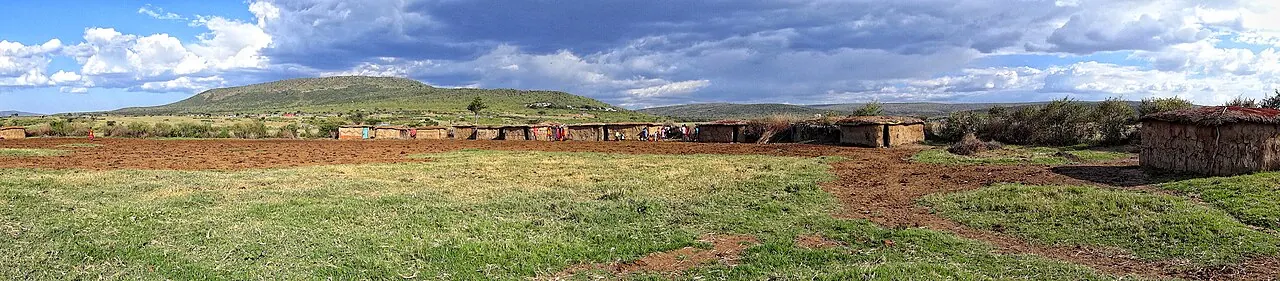

What is Enonkishu Conservancy?
Enonkishu Conservancy is a 5,928-acre conservancy at the northern tip of the Greater Mara on the Mara River, owned by 42 landowners. Its name means a place of cattle in Maa: it puts livestock at the heart of conservation, with planned grazing, and hosts the Mara Training Centre.
- Establishedstatus, 2025 map
- 2009started
- 24 km²published area
- 42landowners
- Listed as ID 1 'Enonkishu Conservancy', type Conservancy, status Established, on MMWCA's Masai Mara Ecosystem-2025 map.2
- In 2016 the Enonkishu Stakeholder Company (ESCO) was set up to administer finances and leases; in 2020 it was replaced by Kileleoni Limited, in which ownership is split 50-50 between landowners and tourism partners.9
- Landowners opt in through a signed, registered lease; a lawyer must be present at signing, terms are read at AGMs, and registration happens before the land control board. Leases commit land for 15-20 years.9
- Livestock rules are not legally binding but set by negotiated consensus (Tyrrell et al. 2024).9
- KWCA's register lists 'Enonkishu Conservancy' under the Mara region, Narok County, MMWCA (read Nov 2026).17
Also written: Enoonkishu (GMME plan spelling), Kileleoni Limited (conservancy company since 2020), Enonkishu Stakeholders' Company Ltd (ESCO, 2016-2020), Enonkishu Cooperative (landowner members).
Where is Enonkishu?
Northernmost point of the Greater Mara on the Mara River, next to Lemek, Ol Chorro Oiroua and Mbokishi, with a hard boundary against cultivated farmland to the north and west. Naretoi, a rewilded former farm, lies alongside. Roads run through it to Emarti and Aitong.13913
Borders and neighbours: Ol Chorro Oiroua Conservancy, Lemek Conservancy, Mbokishi Mara Conservation Area, Naretoi (former Olerai Farm).
Administration: Mara ward, Narok West sub-county, Narok County.
Who owns and runs Enonkishu?
- 42 landowners (MMWCA text)1
- 32 landowners (MMWCA headline; Tyrrell et al. 2024)19
- 31 landowners on 1,721 ha (Biosphere Expeditions 2019)13
- Kileleoni's board (landowners, Naretoi homeowners, tourism partners and an independent chair) sets vision and strategy and holds management to account, with external support on financial transparency.129
- All landowners and their families belong to the Enonkishu Cooperative, which meets quarterly and elects three representatives to the board on rotating three-year terms.9
- Naretoi is managed by a Homeowners Association represented on the Kileleoni board.9
- Conservation fees are collected by Kileleoni; most go to the lease paid to private landowners (2023 impact report).12
- Tyrrell et al. (2024) say the 2020 governance change still needs further work on transparency of fund use and information flow between board and landowners.9
- The Thomson Reuters Foundation (2022) reported that Enonkishu gives women a say in land-management decisions, agreed by community resolution.16
- Leshan Nampaso, Leader in Sustainable Rangeland Management Training (enonkishu.org)6
How do leases and payments work in Enonkishu?
- Tourism partners pay leases of about US$25 per acre per year on 15-year terms, with more paid in good tourism years (Tyrrell et al. 2024).9
- An African Enterprise Challenge Fund grant secured leases at US$20 per acre per year for 3,800 acres owned by 32 landowners and paid the first 3 years (from 2016, per Tyrrell et al.).9
- The conservancy dates a US$700,000 AECF grant (backed by the Gates Foundation) to 2013-14, used to lease the land for 3 years and fund the Sustainable Rangeland Management programme.4
- Leases total over US$90,000 a year, averaging more than US$2,000 per leaseholder (Tyrrell et al. 2024).9
- Each Naretoi plot pays a conservation fee whether occupied or not, at least US$4,500 a year; House in the Wild contributes over US$200,000 a year and the Wild Hub about US$100,000 (Tyrrell et al. 2024).9
- 2025: KES 62 million raised in conservancy fees through Collection in the Wild (up from KES 33 million in 2023); Naretoi raised KES 26 million in homeowner fees and KES 6 million in visitor fees.11
- 2023 Kileleoni spending: land rent 32.6%, employees 16.7%, operations 15.3%, admin 12.2%, Lemek 10.6%, Ol Chorro 8.6%, cattle 3.9%.12
- During COVID-19, Naretoi homeowner fees kept lease payments and ranger salaries going when tourism stopped.411
Lease terms differ between conservancies and change at renewal. Read landowner and leaseholder rights before signing or renewing, or ask for a baraza to go through a lease together.
Can livestock graze in Enonkishu?
- Enonkishu means 'place of healthy cattle' in Maa, chosen by community elders.13
- In 2013-14 the community merged its cattle into one collectively managed herd under a holistic grazing plan ('Herds for Growth').45
- A community grazing committee sets carrying capacity and the livestock units allowed per block per period; each quarter the livestock committee makes a grazing plan from pasture and rainfall monitoring.59
- Herds move in tight high-density groups for short periods; predator-proof mobile bomas fitted with Lion Lights move every 3-7 days; grazed areas rest up to six months; cattle carry GPS collars (2025).115
- Boran bulls were introduced to improve the herd; sheep were eliminated from the conservancy.59
- The herd grew from 216 to 372 head, with 240 calves weaned in five years, only 14 losses to wildlife, and about US$25,000 profit shared by landholding; it became commercially viable in 2022.9
- Owners pay about US$2-3 per head per month for herding, night guards, mobile bomas and veterinary care; extra grazing has been allowed in drought.9
- The unfenced part of the conservancy was divided into nine grazing blocks (2019).13
- Grazing-plan blocks scored on average 24% higher in quality than controls outside (2017-2022 monitoring).9
- The conservancy reports bare ground falling from about 70% to 20% in ten years, and springs returning.37
- No community livestock were lost in the 2016-17 drought, while neighbouring areas without managed grazing lost close to half their herds (conservancy account).4
Grazing rules are made by each conservancy with its landowners. Our page on grazing and conservancy rules sets out how rules can protect wildlife without harming the Maasai pastoral way of life.
What wildlife lives in Enonkishu, and what is its corridor role?
Wildlife in Enonkishu
- MMWCA lists many giraffes, resident buffalo near the Olerai (Naretoi) boundary along the Mara River, visiting elephants, a lion pride on the Enonkishu-Ol Chorro edge, hippos, crocodiles and leopards in riverine forest.1
- Occasional aardvark, caracal, serval and aardwolf; colobus monkeys in Kileleoni Hill valleys; wild dog sightings.1
- The conservancy says the Mara Predator Project found Enonkishu had the highest abundance of lions in the Northern Mara (2022-24).4
- Camera traps have recorded new lions, striped hyenas returning and caracals with cubs.7
- 300+ bird species recorded (2025).11
- Few wildlife were present in Enonkishu before 2016 and none in Naretoi for years before 2010; densities are now similar to or higher than many state protected areas in the region (Tyrrell et al. 2024).9
Migration corridor in Enonkishu
- In 2024-25 neighbouring Mbokishi landowners took down fences and added their land to conservation.4
- Enonkishu and Mbokishi together protected 15,094 acres in 2025, up 10,000 since 2023; Mbokishi has 8,272 acres under protection.11
- Enonkishu sits where arable farmland meets open rangeland; cultivation is its main threat.6
- Narok County's 2026 expansion bill names Enonkishu among buffer conservancies (media report).20
Research in Enonkishu
- 14 permanent vegetation transects are monitored quarterly and scored on 19 parameters, supported by Savory Institute and Ecological Outcome Verification methods; livestock are counted and weighed monthly.7
- Rangers patrol from several bases with headquarters at the Mara Training Centre, use EarthRanger, and run a camera-trap grid; the Mara Elephant Project works with them on boundary conflict.7
- Independent socioeconomic monitoring is done with Sustain.7
- The Mara Training Centre, built in 2014 with AECF funding, trains conservation managers, community leaders and land managers; 700+ pastoralists from West Pokot, Kajiado, Kilgoris, Narok, Loita, Amboseli and elsewhere visited in 2025.13611
- The One Mara Carbon Project held a consultation with selected conservancy management at Enonkishu in 2025.21
Why corridors matter for the whole Mara: opening the migration corridors.
Which camps are in Enonkishu?
What can visitors do in Enonkishu, and what does it cost?
- Every guest staying at a property linked to the conservancy pays a daily conservation fee.8
- Tourism partners work under strict codes of conduct with tracked vehicles, trained guides and low-impact viewing.3
- Guides at Collection in the Wild properties are trained by EcoTraining and follow a code of conduct; access to the partner conservancies, Lemek especially, is controlled to prevent crowding at sightings.12
- shared 4×4 game drives on Enonkishu, Ol Chorro and Lemek
- rhino sanctuary visits (Ol Chorro)
- horse rides
- e-bike rides
- bush breakfasts and picnics
- sundowners
- school visits
- Mara Training Centre visits
- guided farm walks
How conservancy fees compare with Reserve entry: Mara conservancy fees and visitor rules.
How does Enonkishu support its community?
- Landowners receive health insurance funded from conservancy earnings; 179 landowners were covered in 2025 (up 100% since 2023).511
- Other benefits: jobs, women's projects (45+ women in livelihood programmes in 2025), bursaries and conservation-linked businesses.811
- All surveyed landowners said their lives improved since leases began; livestock as main activity fell from 56% to 44% of households (Tyrrell et al. 2024).9
- 8,000 trees planted in 2025, including 4,000+ at eight schools.11
What challenges does Enonkishu face?
- 2009-11: before land rent was secured, 250 families left the plan for cultivation and about 18,000 acres of wild land were lost (conservancy account).4
- Between 2009 and 2016, 15% (994 ha) of the area outside the conservancy was leased or sold and cleared for cultivation (Tyrrell et al. 2024).9
- The conservancy says the threat of cultivation 'never goes away' in one of Kenya's most fertile zones, and landowners have real alternatives.4
- 56% of surveyed members were concerned about the future of livestock keeping (Tyrrell et al. 2024).9
- Mara Beef, which bought and slaughtered local cattle, closed in 2018 because it needed 150 cattle a week to stay viable.9
- Elephants moving between the ecosystem and farmland create the sharpest human-wildlife conflict on the boundary.7
We report what sources say, from every side. Claims made by one party are reported as claims, not as findings; only a court decides who is right, and interim court orders are not final decisions. If you are named here and want your response added, or think something is wrong, write to hello@maraconservation.org and we will review it within 14 days. If you live with one of these issues, a baraza is where it can be raised and recorded.
History of Enonkishu
- 2009Founding meeting under a tree on the edge of Kileleoni Hill.4
- 2011No cultivation on Enonkishu land from 2011 onward.9
- 2012Wood family begins converting the cultivated Olerai Farm into Naretoi.9
- 2013Collective herd formed; AECF grant secured (2013-14, conservancy account).4
- 2014Mara Training Centre built.13
- 2016
- 2018Mara Beef closes.9
- 2020
- 2024Mbokishi neighbours begin removing fences and joining conservation (2024-25).4
- 2025
Where do sources disagree about Enonkishu?
Published figures do not always match. We show each one with its source instead of picking one.
| Topic | What the sources say | Sources |
|---|---|---|
| area | 5,928 acres (MMWCA text) 1,624 ha (MMWCA headline) 2,399 ha (Tyrrell 2024) 1,721 ha (Biosphere Expeditions 2019) 2,428 ha / 6,000 acres (EcoTraining; Thomson Reuters 2022) 28 km2 (GMME 2023) | 191314 |
| number of landowners | 42 (MMWCA text) 32 (MMWCA headline; Tyrrell 2024) 31 (Biosphere 2019) | 1913 |
| founding meeting | representatives of 300 families owning 24,000 acres (enonkishu.org) 150 landowners owning about 10,000 ha (Tyrrell 2024) | 49 |
| date of AECF lease funding | 2013-14, US$700,000 (enonkishu.org) 2016, first 3 years of leases (Tyrrell 2024) | 49 |
| lease rate | US$20/acre/yr under AECF (Tyrrell) about US$25/acre/yr base (Tyrrell) | 9 |
| Naretoi size | 1,000 acres, 40 five-acre plots (Tyrrell 2024; FITW 2025) 400 ha, 34 two-hectare plots (Biosphere 2019) | 91113 |
| House in the Wild capacity | seven cottages, up to 20 guests (CITW 2026) 16 guests (Tyrrell 2024) | 109 |
Questions about Enonkishu
What does Enonkishu mean?
How much is the Enonkishu Conservancy fee?
Collection in the Wild's 2026 rates list US$150 per adult and US$85 per child per night, paid with the booking.10
Can cattle graze in Enonkishu Conservancy?
Where can you stay in Enonkishu?
What is the Mara Training Centre?
Can you game drive in Ol Chorro and Lemek from Enonkishu?
Yes. House in the Wild's rates include shared game drives on Enonkishu, Ol Chorro and Lemek conservancies.10
Who owns Enonkishu Conservancy?
The land belongs to about 32 Maasai landowners who lease it to Kileleoni Ltd, a company owned 50-50 by landowners and tourism partners.9
Sources for this profile
- Mara Conservancies (member tabs): Enonkishu Conservancy · MMWCA
- Masai Mara Ecosystem-2025 map (Ecosystem-Map-2026.pdf) · MMWCA / WRTI · 2025
- Enonkishu home page · Enonkishu Conservancy
- Our Story (timeline) · Enonkishu Conservancy
- Herds for Growth · Enonkishu Conservancy
- Sustainable Rangeland Management · Enonkishu Conservancy
- Monitoring & Evaluation · Enonkishu Conservancy
- Wildlife · Enonkishu Conservancy
- Tyrrell et al. Bridging the conservation and development trade-off? A working landscape critique of a conservancy in the Maasai Mara. Ecological Solutions and Evidence 5(3) · British Ecological Society / Wiley · 2024-07
- CITW Master Rates 2026 (House in the Wild); 2027 sheet gives the same conservancy fees · Collection in the Wild (tourism partner) · 2026
- Futures in the Wild Impact Report 2025 · Futures in the Wild / Collection in the Wild · 2026-04
- Futures in the Wild 2023 Impact Report · Futures in the Wild / Collection in the Wild · 2023-12
- Expedition Report: Kenya 2019 (Enonkishu study site) · Biosphere Expeditions · 2019-12
- Mara Training Centre, Kenya · EcoTraining (operator)
- Greater Maasai Mara Ecosystem Management Plan 2023-2032 (Table 2; livestock breeding) · County Government of Narok / MMWCA / KWS · 2023-02
- How drought-hit Kenyan herders stopped lions from raiding their villages (Thomson Reuters Foundation) · World Economic Forum / Thomson Reuters Foundation · 2022-08-17
- KWCA conservancy register entry: Enonkishu Conservancy (WP REST) · KWCA · 2026-08-24
- OpenStreetMap way 542453822 'Enonkishu Conservancy' (Mara ward, Narok West) · OpenStreetMap contributors (via Nominatim)
- State of Wildlife Conservancies in Kenya Report 2016 · KWCA · 2017
- County Unveils New Maasai Mara Expansion Plan to Address Human-Wildlife Conflict · Kenyans.co.ke · 2026-08-05
- End-of-Year Newsletter 2025 · MMWCA · 2025-12-22
What we could not confirm (5)
- No Wikimedia Commons photographs naming Enonkishu found (searched name and geosearch around the OSM centroid).
- Lalita camp details (operator, beds) not found.
- No written Enonkishu game-drive code (vehicle limits, night-drive rules) found online.
- The MPCP lion-abundance claim is the conservancy's summary; the MPCP figure itself was not found.
- Current Kileleoni board members not listed on an official page.
Researched 22 November 2026. Corrections from Enonkishu landowners, managers and residents are welcome: contact us.
Bring it to a baraza
Landowners, leaseholders, residents, camps and conservancy managers: a baraza is where questions about leases, grazing, corridors and wildlife get answered in the open, in Maa, Kiswahili or English. Ask us to help organise one in your village.