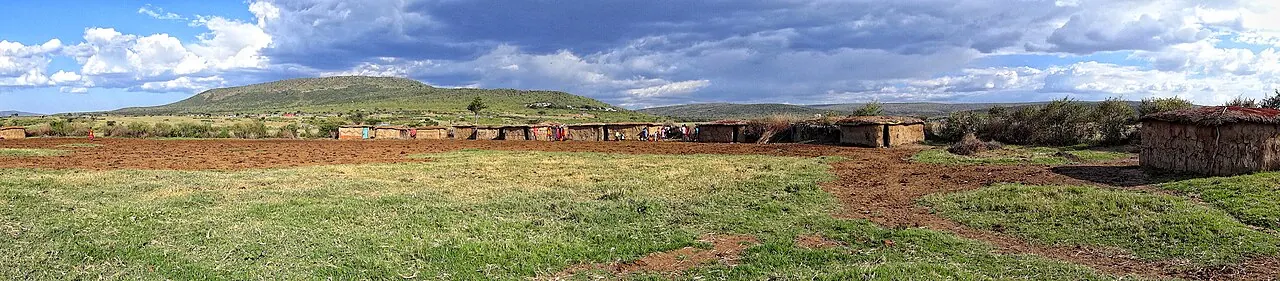

What are the Mara conservancies?
Privately owned Maasai land around the Masai Mara National Reserve, leased by landowners to conservancies that keep it open for wildlife and earn from low-density tourism. MMWCA’s 2025 map lists 39 entries at four stages of development.
How many conservancies are there in the Masai Mara?
MMWCA’s 2025 ecosystem map lists 39 entries: 18 established, 10 developing, 9 emerging and 2 potential. See the directory.
Who owns the land in the Mara conservancies?
What is the difference between the Reserve and a conservancy?
The Reserve is public land run by Narok County; conservancies are private land leased for conservation. Conservancies allow night drives and walks and cap vehicles. See fees and visitor rules.
What is MMWCA?
The Maasai Mara Wildlife Conservancies Association, the conservancies’ membership body, formed in 20133. We are independent of it. See KWCA and MMWCA.
How do conservancy leases work for landowners?
Landowners lease their plots, usually for 25 years since 2019, for a fixed monthly rent per acre, and accept limits on settlement, grazing, fencing, farming and sale.31
How much do Mara conservancies pay landowners?
Published 2012 rates ran from about US$31 to US$48 per hectare a year; in 2020 members reported KSh 7,000 to KSh 92,000 a month depending on acreage45. See lease payments.
Can I sell land that is leased into a conservancy?
Leases restrict land sales for their term1. Read the lease and take advice; see questions to ask.
Do women receive conservancy lease payments?
Payments go to the title holder, usually a man; in a 2010 survey only 3% of households had a woman conservancy member6.
Can people and cattle live in the Mara conservancies?
Yes, under rules. Most conservancies allow grazing by zone, season and time of day, and keep grass banks for drought; settlement is usually kept out of core wildlife areas.6
Can Maasai cattle graze in the conservancies?
Yes, according to each conservancy’s grazing plan: usually by day, in rotation, away from camps, with more access in drought6. See grazing rules.
Who pays if a lion kills my cow?
The law provides compensation at market rates through KWS and the county committee9, but claims take years. Some conservancies, such as Mara North, run faster consolation schemes10. See living with wildlife.
How much of the Greater Mara is fenced?
About 19% in 2020, up from about 5% in 198511. See migration corridors.
Is Mara wildlife doing well?
Mixed. Most species have declined sharply since 1977 and the 2024 census counted 26% fewer animals than 2021, but elephants have risen to 2,702 and lions are stable at about 481.121314
Full figures on wildlife trends.
How can I take part in MaraConservation.org?
Request or attend a baraza, join as a Narok West resident, share local knowledge, or correct a profile.
What is a baraza?
An open community meeting where people affected by a decision hear the facts and speak. See barazas.
Who can join MaraConservation.org?
Any resident of Narok West, landowner or not. See get involved.
Sources for these answers
- Conservation and ecotourism on privatised land in the Mara, Kenya (Bedelian; LDPI Working Paper 9) · Land Deal Politics Initiative (ISS) · 2012
- Conservation, crime and communities: Olderkesi Wildlife Conservancy, Kenya (case study) · IIED · 2018-10
- MMWCA Strategic Plan 2026-2036 (summary) · MMWCA · 2026-03
- Conservation, tourism and pastoral livelihoods: Wildlife conservancies in the Maasai Mara, Kenya (PhD thesis, C. Bedelian) · University College London · 2014
- Coronavirus threaten livelihoods of Mara residents · Kenya News Agency · 2020-06-12
- Trade-offs for climate-resilient pastoral livelihoods in wildlife conservancies in the Mara ecosystem, Kenya (Bedelian & Ogutu) · Pastoralism: Research, Policy and Practice · 2017-05-23
- Covid-19 pandemic effects and responses in the Maasai Mara conservancy · Peer-reviewed article (PubMed Central) · 2023
- When Pandemic Hit Maasai Mara, New Fund Stepped in to Stabilize Conservancies, Protect Wildlife · Conservation International · 2023-07-06
- Wildlife Conservation and Management Act, Cap. 376 (No. 47 of 2013), as at 4 November 2025 · Kenya Law · 2025-11-04
- National human-wildlife conflict assessment for Kenya (FAOLEX record ken233832) · Government of Kenya document via FAOLEX (exact title not captured) · 2024
- New land tenure fences are still cropping up in the Greater Mara (Løvschal et al., Sci Rep 12) · Scientific Reports (Nature) · 2022-07-06
- Continuing wildlife population declines and range contraction in the Mara region of Kenya during 1977-2009 (Ogutu, Owen-Smith, Piepho & Said) · Journal of Zoology · 2011-05-20
- National Wildlife Census 2025 Technical Report (abridged) · WRTI / KWS / Ministry of Tourism and Wildlife (copy at Rhino Resource Center) · 2025-12
- MPCP Q1 2026 Technical Report: updated lion and cheetah figures · Mara Predator Conservation Programme (Kenya Wildlife Trust) · 2026-06-02
Sources checked 22 November 2026.
Bring it to a baraza
Landowners, leaseholders, residents, camps and conservancy managers: a baraza is where questions about leases, grazing, corridors and wildlife get answered in the open, in Maa, Kiswahili or English. Ask us to help organise one in your village.